
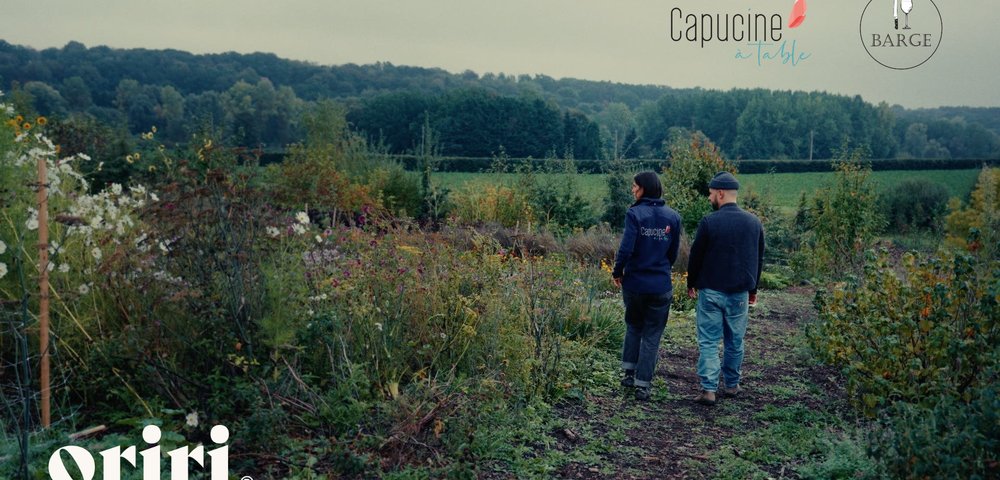
In the spring of 2019, L'Avenir published a short article about a young woman who had recently moved to Rosières, near Rixensart, to grow edible herbs and flowers for chefs. Grégoire Gillard's grandmother read it, immediately thought of her grandson, and slipped the paper into his pocket. Grégoire thanked her, as always, and the paper stayed there. The day he found it again, he happened to be in the area. He called to ask if he could come by. "I'll be there in ten minutes."
Stéphanie de Bellefroid was in her very first season. An engineer by training, she had left her old job to return to farming, with a clear idea: "I could be that garden for all the chefs who don't have the option of having someone grow their own food." That day, her shiso plants were at their peak. Grégoire, who was preparing to open his own restaurant, touched them, smelled them, and the decision was made right there: they would work together.
"I could be that garden for all the chefs who don't have the option of having someone grow food for them."
The short film that Jonas Buysens of Buzzup Creative shot in September recounts this encounter and follows it to the present day: a Monday harvest in Rixensart, the kitchen of Barge on Boulevard d'Ypres in Brussels, and the dining room where Marie Houx, sommelier and manager, composes the pairings. This text focuses on a part of the journey that the film only sketches, the part that leads Stéphanie's botanicals to the glass.
Loaded herbs
What Grégoire looks for in these plants explains why they also end up in a glass. "It doesn't produce microgreens, it produces large herbs that grow in the ground, and therefore they are aromatically rich, full of essential oils," he says in the film. He speaks of "very pronounced flavors that will bring spice, intensity, and bitterness." Stéphanie then asks what the harvest will be used for—processing, plating, or a final touch—and adjusts the harvesting accordingly.
These essential oils are precisely what alcohol can extract. An herb full of aromas in cooking retains its flavor in a maceration, and what enhances a dish can just as easily enhance a drink.
A bottle for two
The next step came from the kitchen. As they experimented together, Grégoire wondered, says Stéphanie, how to evolve his restaurant in the same direction: the herbs and flowers already came from her home, it remained to extend this to the drinks.
A few years after their meeting, VodCa was born, a fine spirit that Capucine à table describes as stemming from a shared desire with the Barge team: to translate their love of plants into a glass. It is made exclusively from plants cultivated by Stéphanie, through maceration and then distillation, and comes in two versions. The first, with rose geranium, is sweet and floral. The second combines marigold with tansy and offers a more herbaceous character.
Liqueurs, and a palate that approves
VodCa opened a door. Capucine à table now also produces its own herbal liqueurs. In the film, the idea is summed up in one sentence: the market lacked "a liqueur with slightly different botanicals, produced right here in close proximity to the restaurants where it would be served." At Barge, VodCa still serves itself, but these days it's primarily these herbal liqueurs that end up in the glasses.
For these liqueurs, Grégoire maintains a specific role. According to Stéphanie, he tastes each recipe and approves it before it's finalized. The chef who selected shiso in 2019 has become the palate that confirms each bottle.
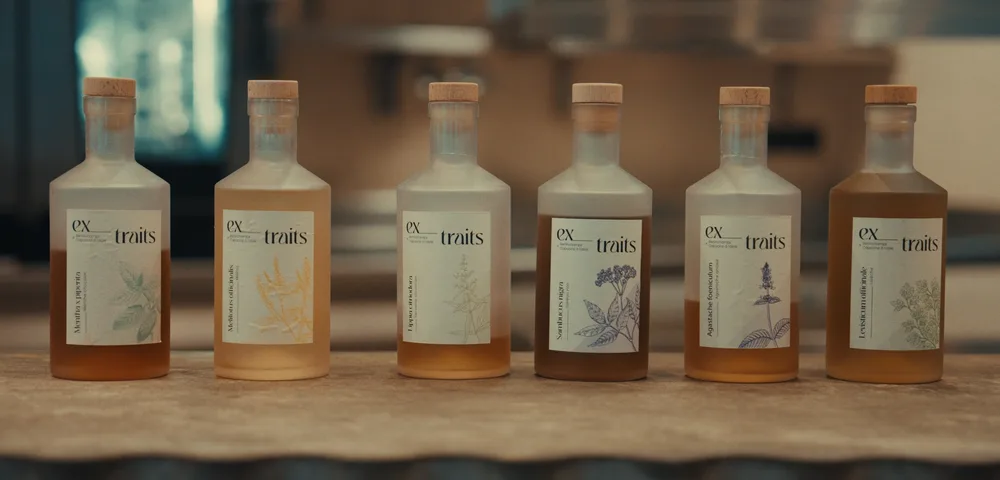
In the theater, Marie Houx has her favorite: anise hyssop, an intense and naturally slightly sweet plant. "It actually makes everyone like anise a little bit," she says in the film.
The alcohol-free glass
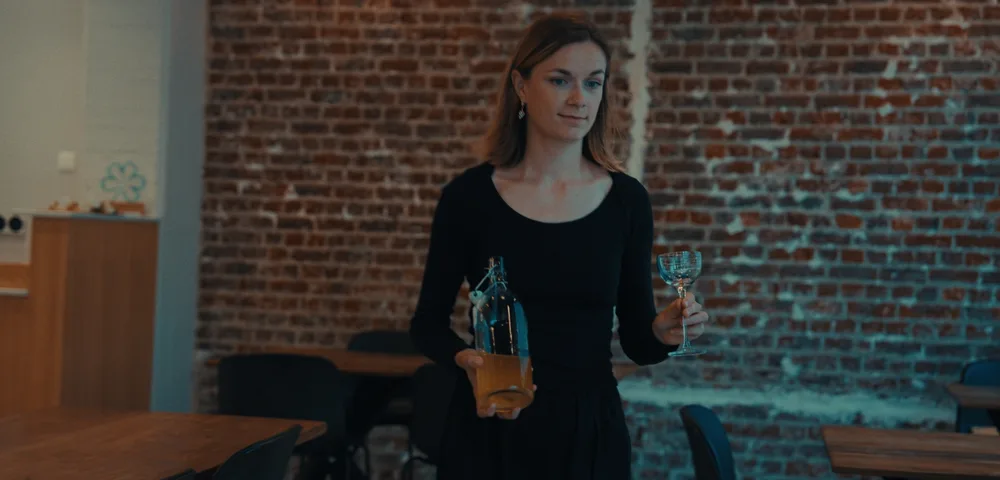
The journey of plants continues beyond spirits. Marie also creates non-alcoholic pairings. With a beetroot served on a bed of lacto-fermented juice, she pours a cold infusion of milky oolong, a tea with rich, creamy notes, enhanced with oregano from Stéphanie's garden and a touch of pink peppercorn. The result is, in her words, "a truly fragrant, very floral profile," which complements the beetroot with a hint of spice. The oregano, cultivated for cooking, thus becomes a key ingredient in the pairing.
A field that remains open
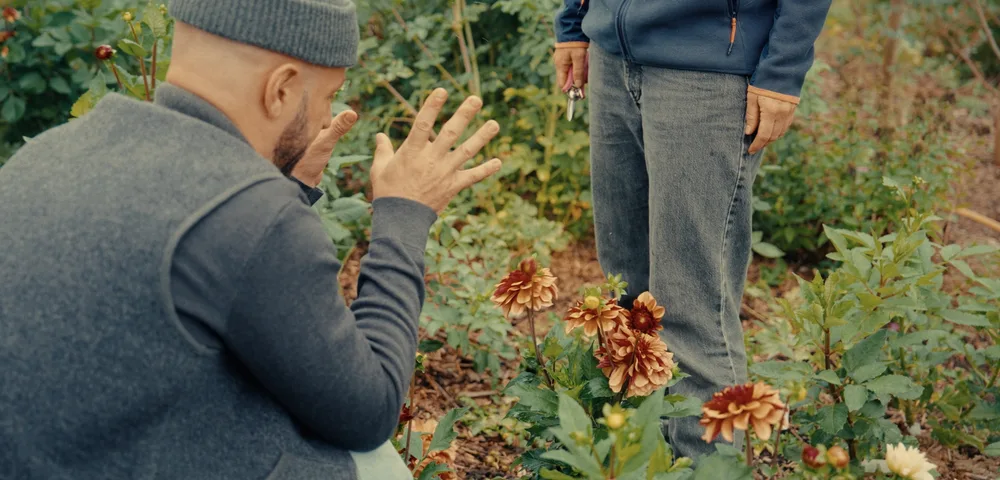
What connects the plate and the glass is a working method that has been in place since 2019: experimentation. In the film, on a Monday during harvest time, Stéphanie shows Grégoire a plant cultivated this year, sweet verbena, small and potent, then eucalyptus verbena with its woody aromas. Grégoire reacts immediately: "I'd like to take a small box to try out this week at the restaurant." The next dessert, featuring kiwi, will serve as the testing ground.
Monday is harvest day, and the plants are in Barge by the next day. The shiso from the beginning is still there. In season, when they're at their best, Grégoire preserves them, pickled, to retain their spicy flavor in his dishes.
From the scrap of paper to the label
Since 2019, the story has grown in scale while retaining its essence. It began with a scrap of paper in a pocket. Today, it encompasses a label on a bottle, a liqueur approved in the kitchen, and a non-alcoholic pairing created in the dining room. In between, there have been hundreds of Mondays spent harvesting ingredients and trials, successful or not, conducted by both sides.
Video: Jonas Buysens, Buzzup Creative