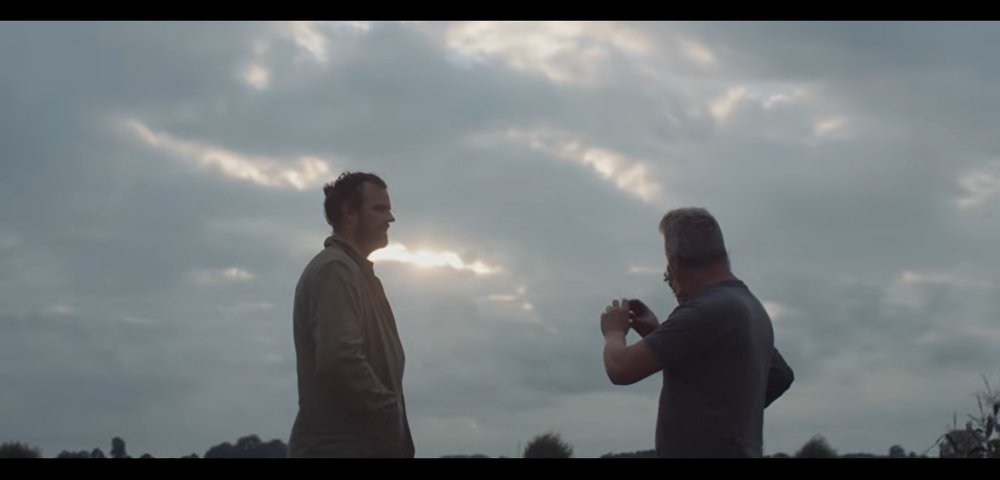
The first time Willem Hiele drove away from Lo-Reninge, he said nothing more.
The first time I drove away from here, I actually became really quiet in the car.
It is a half-hour drive from De Blauwe Spie to his restaurant in Oudenburg, straight through the polders. Enough time to think about what you have just seen. "What those people are doing here is very endearing. And it is, in fact, spotless."
A chef who falls silent because of a farmer. That is more remarkable than it sounds, because the products his kitchen works with are truly impressive. "The best caviar, the finest langoustine, a rabbit raised by a farmer. The finest Flemish Red beef. An egg laid by a free-range chicken." That is the company Mattias Plaetevoet's vegetables find themselves in.
Cut through the root
What convinced him was something you can check with a knife. "If you cut open a carrot from De Blauwe Spie, and you cut open a carrot from some supermarket chain, you simply see a very clear difference in cell structure."
That difference comes from somewhere. On the clay soil of the IJzer Plain, Mattias and his father Johan have been working biodynamically since 1985, with a sowing calendar and a harvest rhythm that follows the phases of the moon. To those looking at it from the outside, that sounds esoteric. For those who taste the roots, it is above all a practice with consequences.
Willem lists them like a sommelier describes a series of wines. "We have five or six different types of carrot in the greenhouses, after all. But just think of the nuances between each carrot: one a bit more peppery, another a bit more sugary; that one had a touch of bitterness. The other was a bit sweeter."
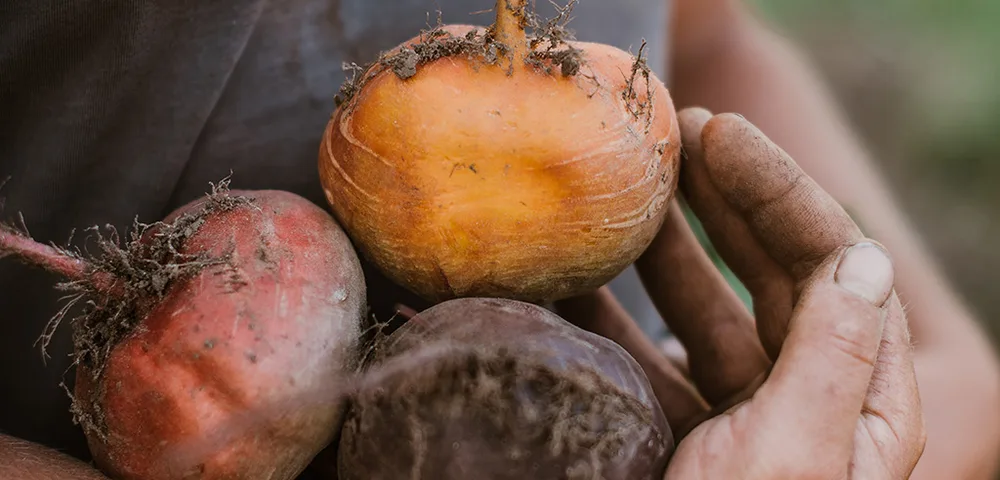
Five or six carrots from the same field, and just as many different flavors. In conventional trade, that distinction does not exist, because a carrot there is a carrot, sorted by thickness and length. Here, it becomes a palette.
And then follows the sentence that summarizes the entire collaboration. "If you go for the primal taste of that carrot, that is worth just as much to me as a langoustine."
That sounds like a compliment to a supplier, but it is a rearrangement of the hierarchy upon which classic gastronomy is built, in which shellfish and game stand at the top and vegetables serve as accompaniments. Anyone who places a carrot on equal footing with a langoustine must organize their kitchen differently.
What lies underneath
On the other side of those polders, it starts with the soil. "We touch the earth, and we taste it, we smell it," says Mattias. "And that way, you know what your soil is made of."
In agriculture, soil knowledge has largely moved to the laboratory, to sampling and analysis reports. At De Blauwe Spie, however, it is still in the hands. The logic of biodynamic work starts with a reversal: you feed the soil, and the soil feeds the plant. "Try to make that soil rich again, precisely to increase that fertility and, in this way, also obtain living food."
This involves something that is rarely found in business plans. "What we also consider very important in this regard is giving the soil rest. People and animals also need rest. It is actually only logical that we take the same care of our land."
That rest is also a form of insurance. Soil with structure and organic matter retains moisture during weeks without rain and tolerates heat better. "In doing so, we help mitigate climate change to some extent," says Mattias, and that is the down-to-earth version of a grand statement: a field that holds its own in an extreme season.
The cell structure that Willem sees in his root begins there.
Vegetables for a month
This autumn, Willem is building a menu around that. From September to December, he hosts Terroir Middagen every Friday, Saturday, and Sunday afternoon, with a menu that follows the rhythm of the seasons and the fields around him. In September, that rhythm comes from a single farm: the harvest from De Blauwe Spie forms the starting point for the entire menu, and that menu is vegetarian that month.
He adds himself how unusual that is. "We are not a vegetarian restaurant right now." That is precisely why it means something. A kitchen that relies on caviar, langoustine, and Flemish Red beef clears the menu for a month to make room for vegetables from a farm in Lo-Reninge. In October, the principle shifts with the seasons, when the hunting season opens and game is processed from head to tail.
When serving, the farm is brought to the table. "That is also where I tell the story of De Blauwe Spie, about Mattias, about who he is," says Willem. "And that is truly a philosophy that I want to uphold immensely in my restaurant."
That goes beyond the kitchen. "It's Sunday afternoon. What are we going to do? We're going to drive out with the boys to De Blauwe Spie for a change, to Mattias." The staff joins them out into the field. Whoever has seen the carrot grow tells a different story about it at the table.
Become still
What stuck with him the most is about something other than taste or technique.
The fire between a father and a son. I even found it moving.
Forty years separate Johan's first three hectares and the business of today, and that transfer is visible in the field.
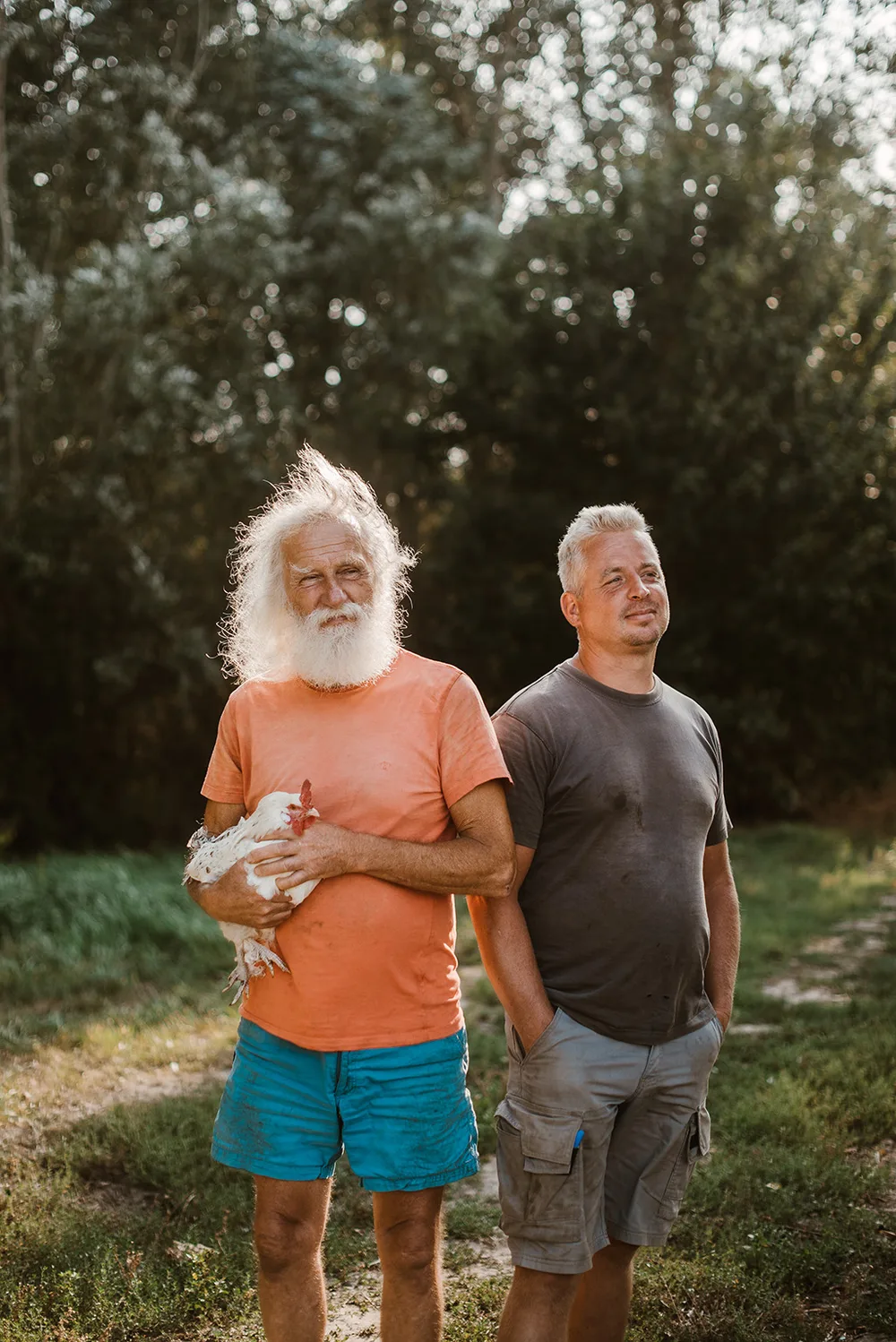
"Those are actually people who should be on television," says Willem. For now, they appear on the plate, which in his case has the same effect. "That is a moment of silence in the restaurant. Silence in the restaurant. Silence in the car."
The curious thing is that Mattias uses the same word, without knowing about that car. "A farmer must become quiet, a farmer must walk in his field once and must be able to enjoy that sun on his back once. And be able to look at his fruits and find happiness in that."
A farmer who falls silent in his field. A chef who falls silent in his car. A table that falls silent at the first plate. It is the same moment three times, and it runs from the clay in the Yser Plain to a dining room in Oudenburg.
Made by Gerdy Vandermeersch / PJ Andries