
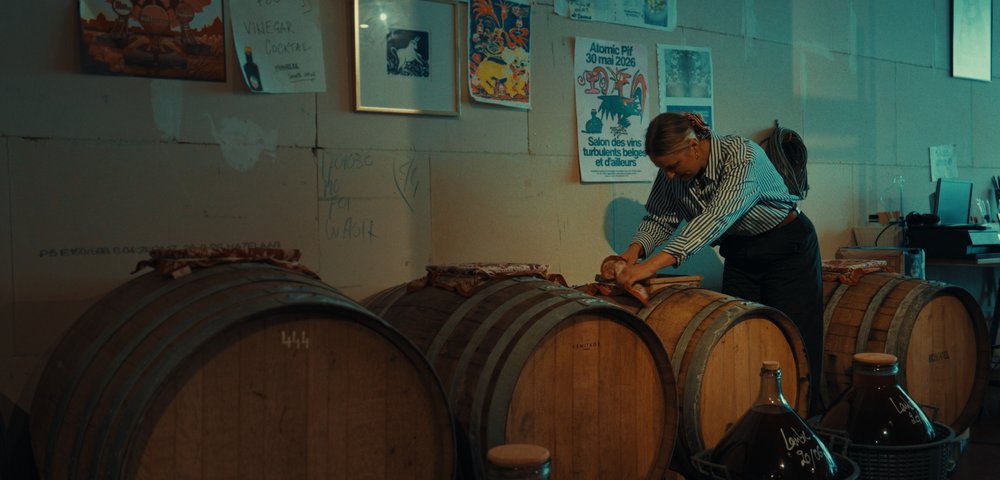
At number 53 Rue Gheude in Anderlecht, old oak barrels, open at the top, stand in a row. Vinegar is maturing inside. It seems innocuous, and yet this is the first address in over a century where this is still happening in Brussels.
Around 1900, the city boasted some twenty vinegar works. They supplied households, caterers, and the canning industry. One of them, the Étoile vinegar works in Molenbeek, produced date vinegar. Its name appears in nineteenth-century trade registers, alongside those of the merchants who supplied the city. And then nothing. Anyone wishing to reconstruct the history of Brussels vinegar today must delve into the city archives themselves, as historians have written very little about it. A trade disappearing to the point of taking its own history with it: that's rare.
How a profession evaporates
Vinegar is as old as bread, wine, and oil. It arises spontaneously wherever alcohol, oxygen, and acetic bacteria meet, preserving what would otherwise spoil. For centuries in Brussels, it was a by-product of breweries: beer that had traveled too far would turn into vinegar, and this vinegar would retain the taste of the beer from which it came.
In the nineteenth century, everything changed. Vinegar makers switched from beer to alcohol, a cheaper raw material that was always available and uniform across the globe. Around the same time, the German engineer Frings developed a machine that accelerated fermentation: where the Orléans method took months, an acetater completed the conversion in just a few days. The result was acidic, clear, stable, and inexpensive. It was also, in terms of taste, practically empty.
Vinegar has thus become what it is for most people: a bottle at the back of the cupboard, its origin and maker unknown. The product has lost its place on the table, and the artisans their craft. In Brussels, not a single one remained.
A detour via Modena
Daphné de Crombrugghe came to this by an unconventional route. She worked in management but had to leave for health reasons. Seeking a profession closer to the land, she went to a farm near Modena to learn how to grow vegetables. She stayed there for three months and tasted a traditional 26-year-old balsamic vinegar every day, made using methods passed down through generations. In Modena, vinegar is a noble product, with its tradition of aging and its price. The contrast stayed with her.
Back in Belgium, she began experimenting at home. What struck her was the bland taste of most commercially available vinegars and the lack of transparency surrounding their origins. To learn the craft, she completed an internship at La Guinelle, an artisanal vinegar producer in the Pyrénées-Orientales region that ages its vinegars outdoors. In 2023, she opened Vinaigrerie Sainte Odile, the country's first artisanal vinegar producer, in a town that once boasted twenty such producers.
She states her ambition quite plainly: to restore the image of vinegar by giving it aromatic complexity.
Craftsmanship, slowly
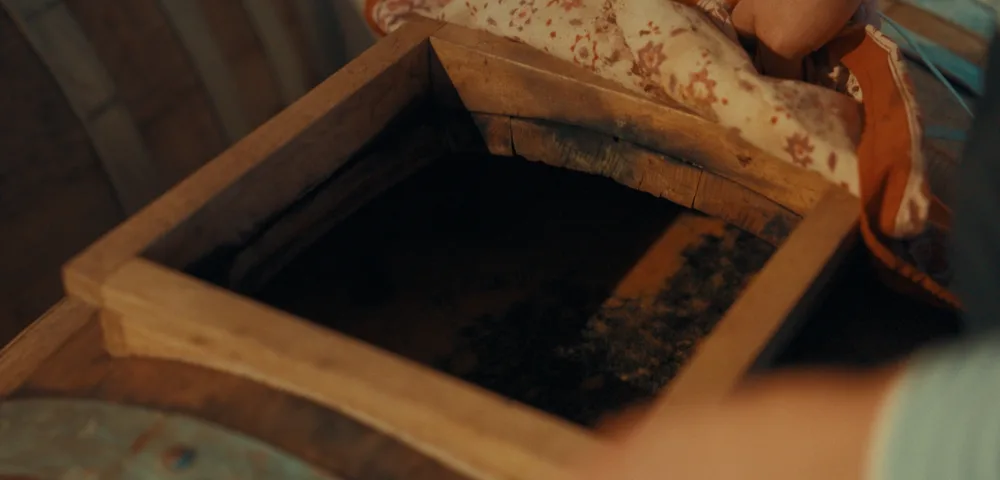
The Rue Gheude method revives a technique abandoned by the industry a century ago. The alcohol rests in old, open oak barrels, allowing the acetic bacteria to access the oxygen they need. They work at their own pace, for at least a month. The vinegar is then transferred to demijohns for aging. In an acetate vat, the same process would take only a few days. The key advantage is precisely that it doesn't.
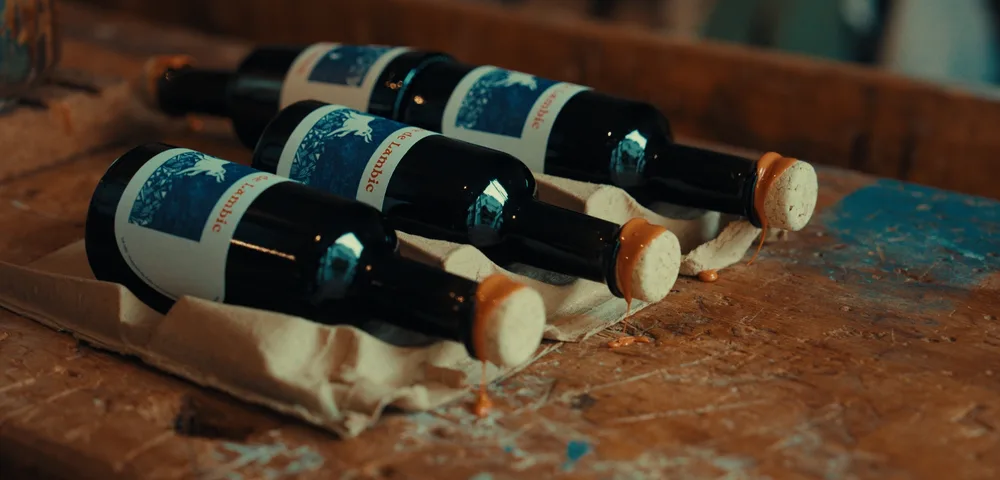
She chooses her raw materials for their complexity: certified organic spirits, without added sulfites, fermented with indigenous yeasts. She works with distilleries that also take their time. 3 Fonteinen supplies the lambic and kriek. For the cider, she turns to the Cidrerie du Condroz, which presses apples from high-stem orchards in the Condroz region, a skill that also came very close to disappearing.
Why the best beer makes the best start
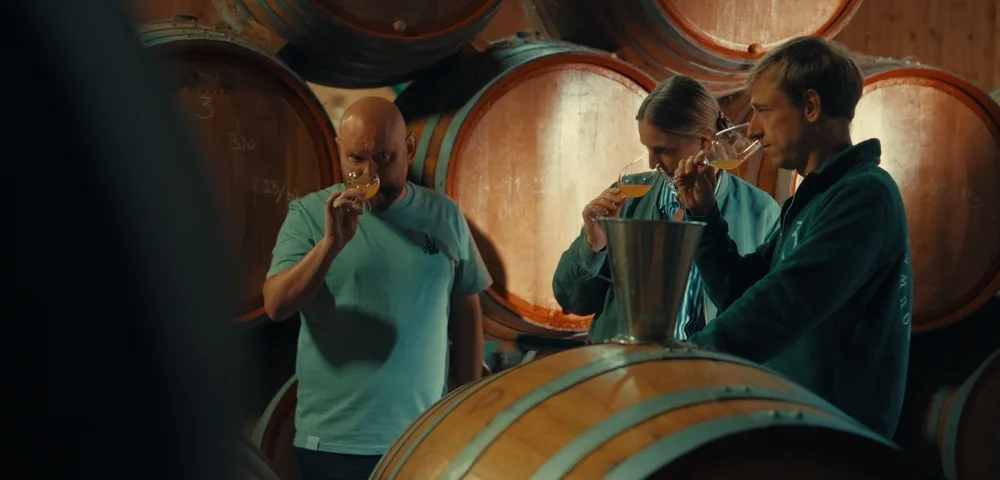
This is where the heart of her craft lies, and it's also the starting point for the film about this collaboration. At 3 Fonteinen, the logic seemed obvious at first glance: there are always some barrels left with a slight acetic edge or an acidity that throws a gueuze off balance, and these barrels seemed ideal for someone making vinegar. Daphné declined the offer. She wanted the good barrels.
The reason is technical and undeniable. Acetic fermentation transforms alcohol into acetic acid, but adds nothing. Everything the beer contains ends up in the vinegar, concentrated and amplified. An angular barrel produces angular vinegar. A layered barrel produces layered vinegar. His website sums it up in one sentence: to make good vinegar, you have to start with good wine, good cider, or good beer.
This is the reversal that underlies the whole story. Where vinegar was for a century the destination of what was left, here it becomes the destination of what was best.
What makes lambic so appropriate
If lambic is used so extensively as a raw material, there's a reason. The beer ferments spontaneously thanks to wild yeasts, matures for years in oak barrels, and develops an oxidative character that most beers never achieve. It has age, and this age brings layers: malt and biscuit notes, fruit, a saline minerality, and tannins from the wood. These are precisely the layers a vinegar maker needs to balance the acidity, because acid without counterbalance becomes harshness.
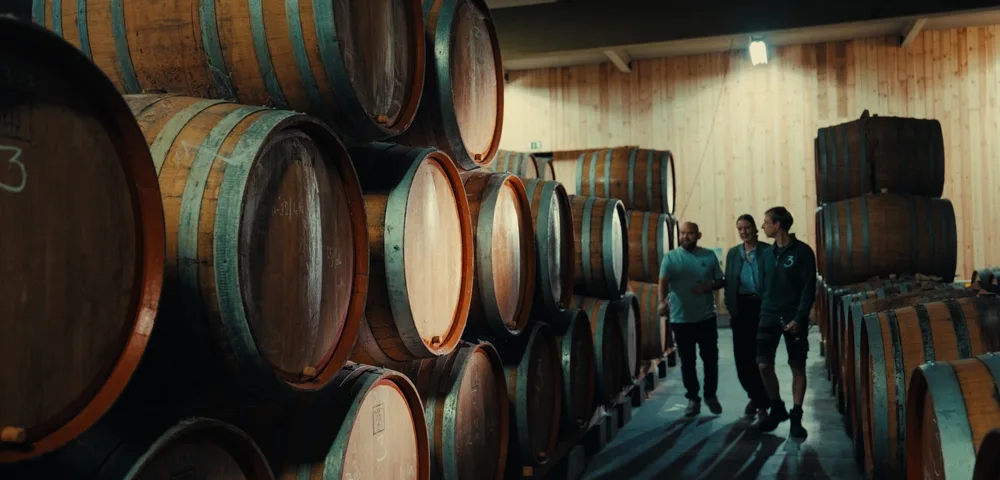
Added to this is kriek. 3 Fonteinen matures its lambic on Schaerbeek cherries, an old variety from the Brussels region. What emerges goes beyond a simple fruity taste: a supple structure appears, with a roundness that contrasts with the salinity. This is terroir in the truest sense: the climate, the geology, and above all, the traditions and history attached to a product. Of all beer styles, lambic is the one that can be described in these terms, so deeply rooted is it in the Senne Valley.
And this characteristic survives the transformation. Perhaps this is the most troubling thing about the resulting vinegar: the starting point remains perceptible.
The circle, longer than it appears
The chain of production takes you far from Rue Gheude. It begins in the fields of the Pajottenland, with the farmers who cultivate the grain and hops destined for Beersel. There, the beer is brewed and aged for years. Some of these casks are then transported to Anderlecht, where a process lasting several months begins again. What ends up in a bottle finds its way to kitchens where just a few drops are enough to transform a dish.
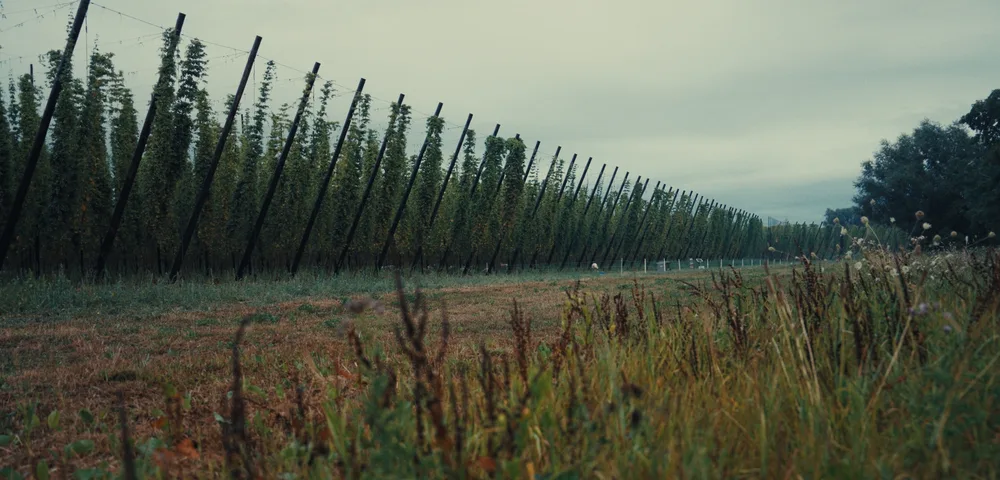
Each link in this chain works with time as its primary instrument. And each link knows the previous one personally. This is what holds the whole thing together: a vinegar maker who chooses her own barrels, a brewery that knows where her grain was grown, farmers who know for whom they sow.
A hundred years ago, this town boasted twenty vinegar works. Today, there's one again, and it makes vinegar with the finest beer it can find. It's more than just a trade returning. It's the correction of a century-long misunderstanding.
Video: Buzzup Creative - Jonas Buysens - https://buzzupcreative.com/work