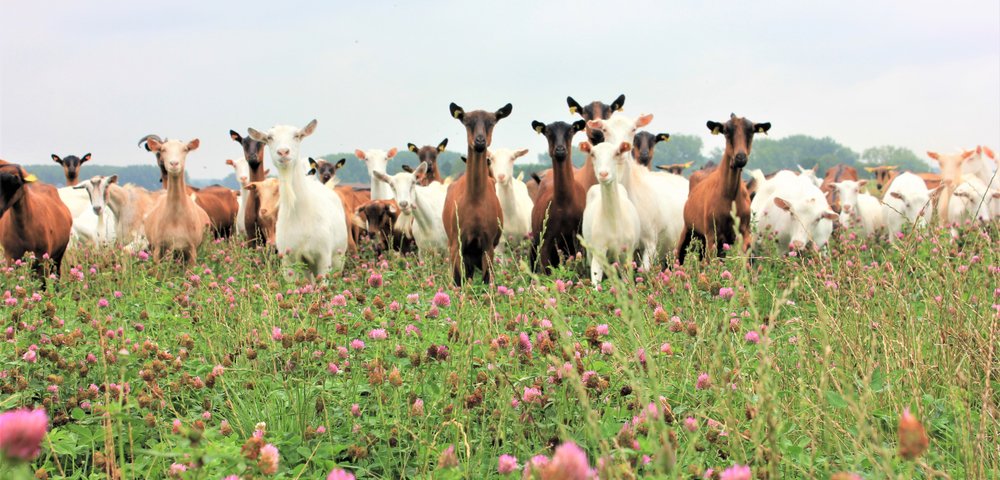
De Volle Maan, an organic goat farm, is situated in the landscape of the Flemish Ardennes. What began in 1994 with eighteen goats in an old cowshed has grown into a family business with around six hundred goats today, where organic goat cheese is still made using traditional methods.
Anyone walking around our farm hears the bleating of the goats and sees the activity in the cheese dairy. But much more is happening. Birds sing in the hedges, dragonflies skim over the water around the pond, and bees buzz back and forth among the flowers. These are small details that might not immediately stand out, but they tell a lot about how we view agriculture.
For us, cheesemaking goes beyond our dairy; it begins out in the pasture.
From the very beginning, we wanted to take care of the environment in which we work. The switch to organic farming in 2002 was therefore a logical choice. Not because organic is an end in itself, but because we believe that agriculture and nature can reinforce each other.
The architecture of nature
Over the years, we have paid a great deal of attention to the landscape around our farm. We planted 350 trees and more than 1,500 meters of hedges. These provide shelter for our animals, protect the pastures from the wind, and create a home for birds, insects, and small mammals. Species such as little owls, kestrels, and lapwings are finding their place here once again.
By maintaining trees and installing nest boxes, we strengthen the natural balance. Owls, for example, help keep rodent populations under control without chemical means. This creates a system of reciprocity: a habitat in exchange for natural regulation.
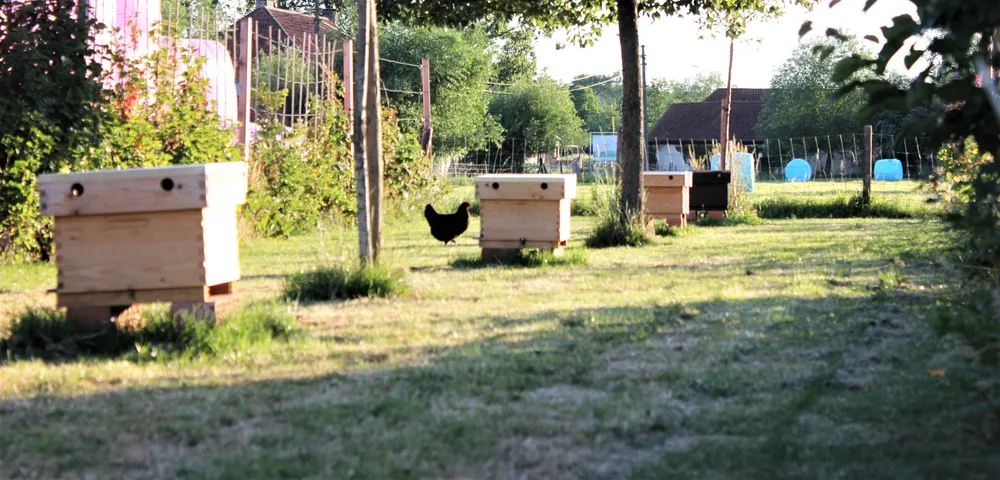
The ecosystem lives on above the fields as well. Beehives and stork poles demonstrate our commitment to biodiversity in the air. Bees play a crucial role in the pollination of fruit trees and wild flora in the meadows. In this way, the cycle of flowering and fruiting remains intact and resilient.
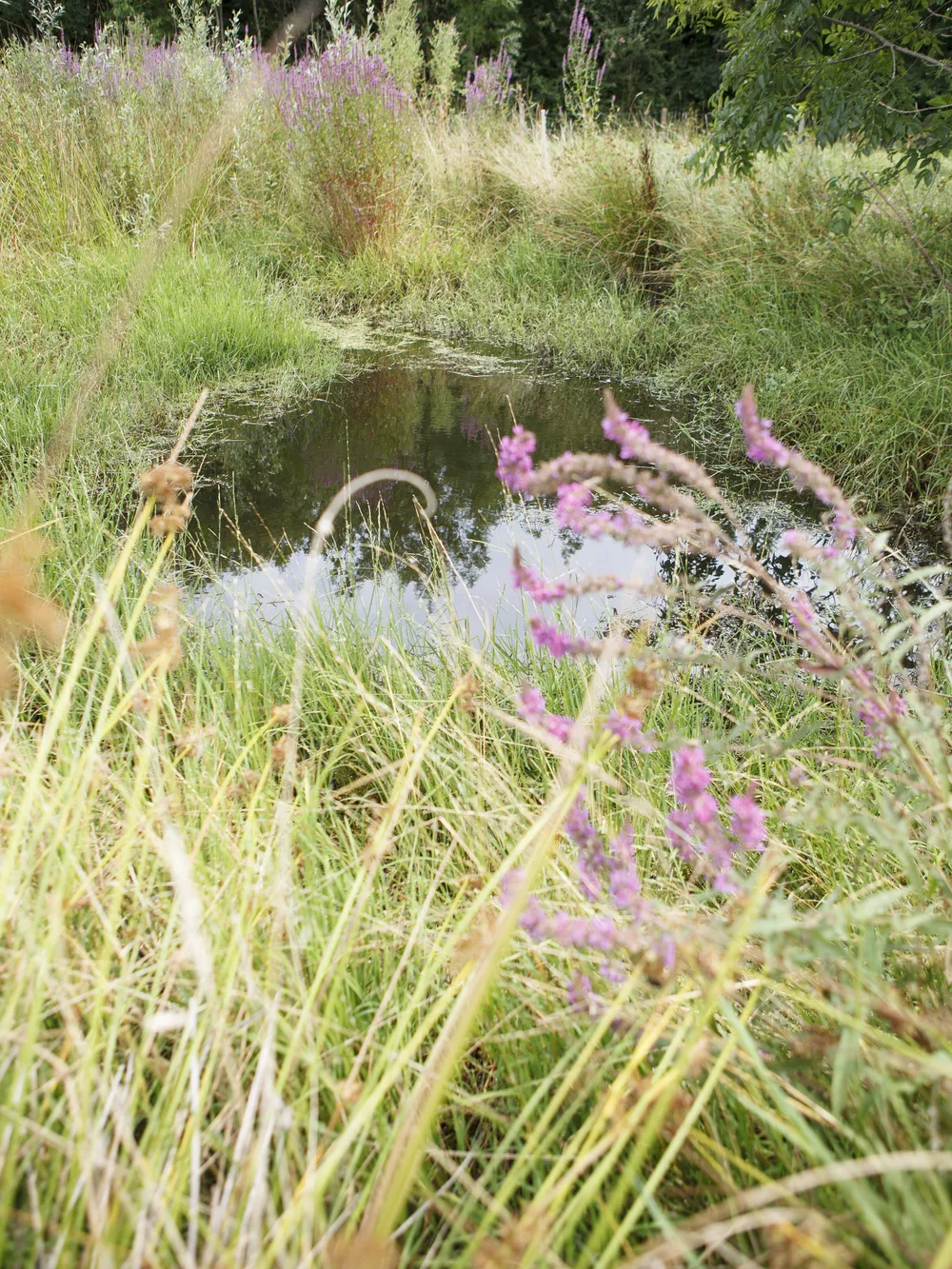
Water is also given space here. In 2009, we restored an old pond, which grew into a lively spot full of frogs, dragonflies, ducks, and aquatic plants. During the dry summer of 2022, it was further deepened and enlarged so that it can continue to fulfill its role in the future.
In addition, we have been investing in rainwater harvesting for years. With a capacity of 400,000 liters, we can bridge dry periods and provide our animals with drinking water, while conserving this precious resource.
The soil is also given time to recover. We deliberately sow clover, dandelion, yarrow, and wild chicory in our meadows. Clover nourishes the soil naturally, while deep-rooted herbs bring minerals to the surface. In the first few years, the effect is subtle, but over time we see more earthworms, insects, and birds appear. Nature responds slowly, but consistently.
The taste of diversity
Our goats graze outdoors as much as possible, from the first sunny days until sometimes deep into the autumn. It is always striking how, after the winter, they crowd at the fence to get back into the pasture.
Clover is our trump card: our pastures are full of it. This unique plant extracts nitrogen from the air and ensures rich pastures. You can ultimately taste the diversity in the grassland in the milk and the cheese. When the goats roam outdoors and eat a rich array of grasses and herbs, the result is milk with a fuller aroma and a richer nutritional profile, including omega-3 and omega-6 fatty acids.
Just as a chef consciously chooses herbs, we work with a diverse seed mixture of grasses and herbs. After a few years, we see how the landscape changes: more soil life, more insects, and more birds. Species such as lapwings, little owls, and kestrels are returning.
Everything is interconnected: healthy soil nourishes strong plants, strong plants feed healthy animals, and healthy animals produce high-quality milk. What grows on our pastures eventually finds its way to our cheeses.
Inspired by the cycle
We believe that every decision on our farm has an impact, from planting a hedge to restoring a pond. By actively fostering biodiversity, we are building a landscape that is resilient, self-regulating, and rich in life.
In this regard, the role of the farmer extends far beyond production alone.
It revolves around observation, collaboration, and respect for natural processes. Healthy soil leads to healthy plants, which feed healthy animals and ultimately provide nutritious food for people.
We believe that true taste begins with care. This holistic vision reminds us that anyone choosing food produced with respect for nature does not just buy a product, but also supports a way of working.