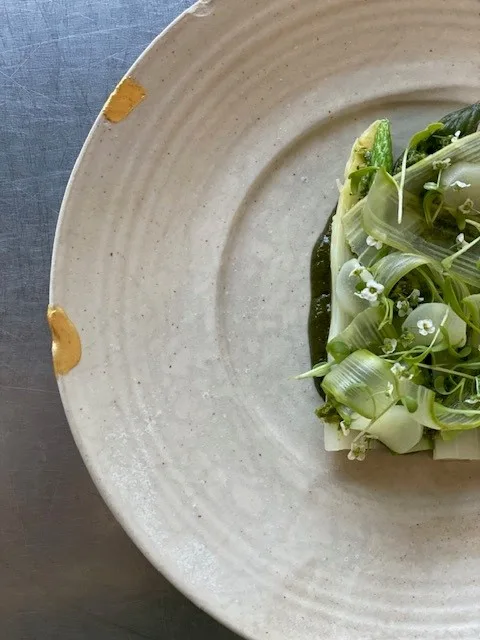
When Nils and Annelies were designing their restaurant Neon in Lierre, they came, a year before the opening, to a workshop in the Ardennes. Not for the furniture. Not for the textiles. For the plates. The ceramics were chosen even before the chairs or curtains were finalized.
They had discovered her work by chance. A plate spotted here, another there, through social media, and one thing led to another, culminating in a dinner in Copenhagen at Alouette. It was through these detours that they finally found their way back to her. What had captivated them wasn't in the plate. It was the plate. Enough to ask her to envision, with them, the table setting of a restaurant that didn't yet exist.
In a restaurant where vegetables take center stage and almost nothing goes to waste, a plate isn't just decoration. It's part of the story. A carrot pulled from the ground a few hours earlier demands a presentation that reflects the same care. Kengen understands this. Her work can now be found on tables in Belgium and far beyond, but it all begins in the same place: at the wheel in Vaux-sur-Sûre, in the heart of the Belgian Ardennes.
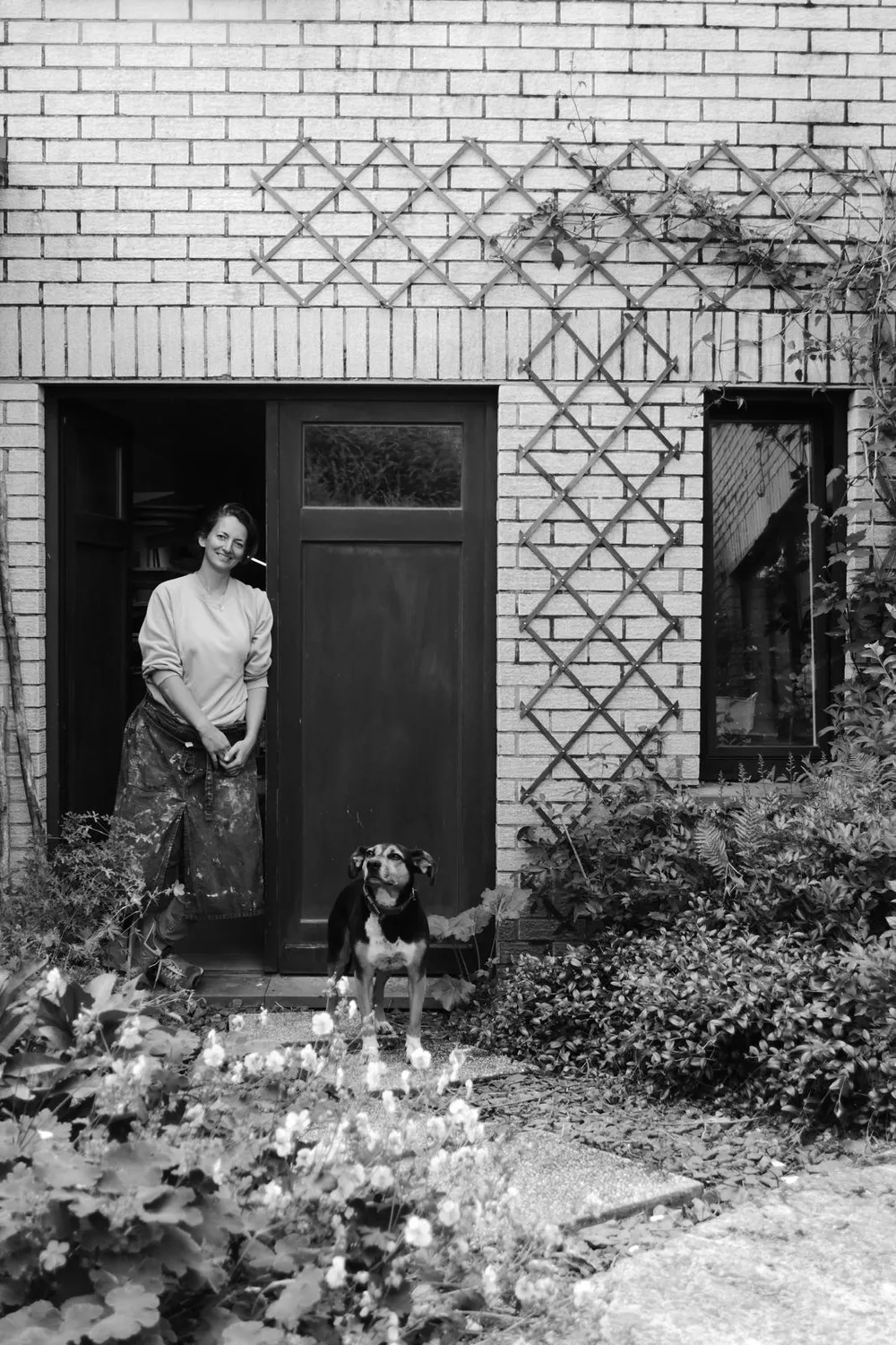
Recognizing the hand
Eva doesn't have a fixed catalog. Each project is redesigned, depending on who will use it. This is a deliberate choice, and it's also at the heart of her approach. What she does isn't mass production.
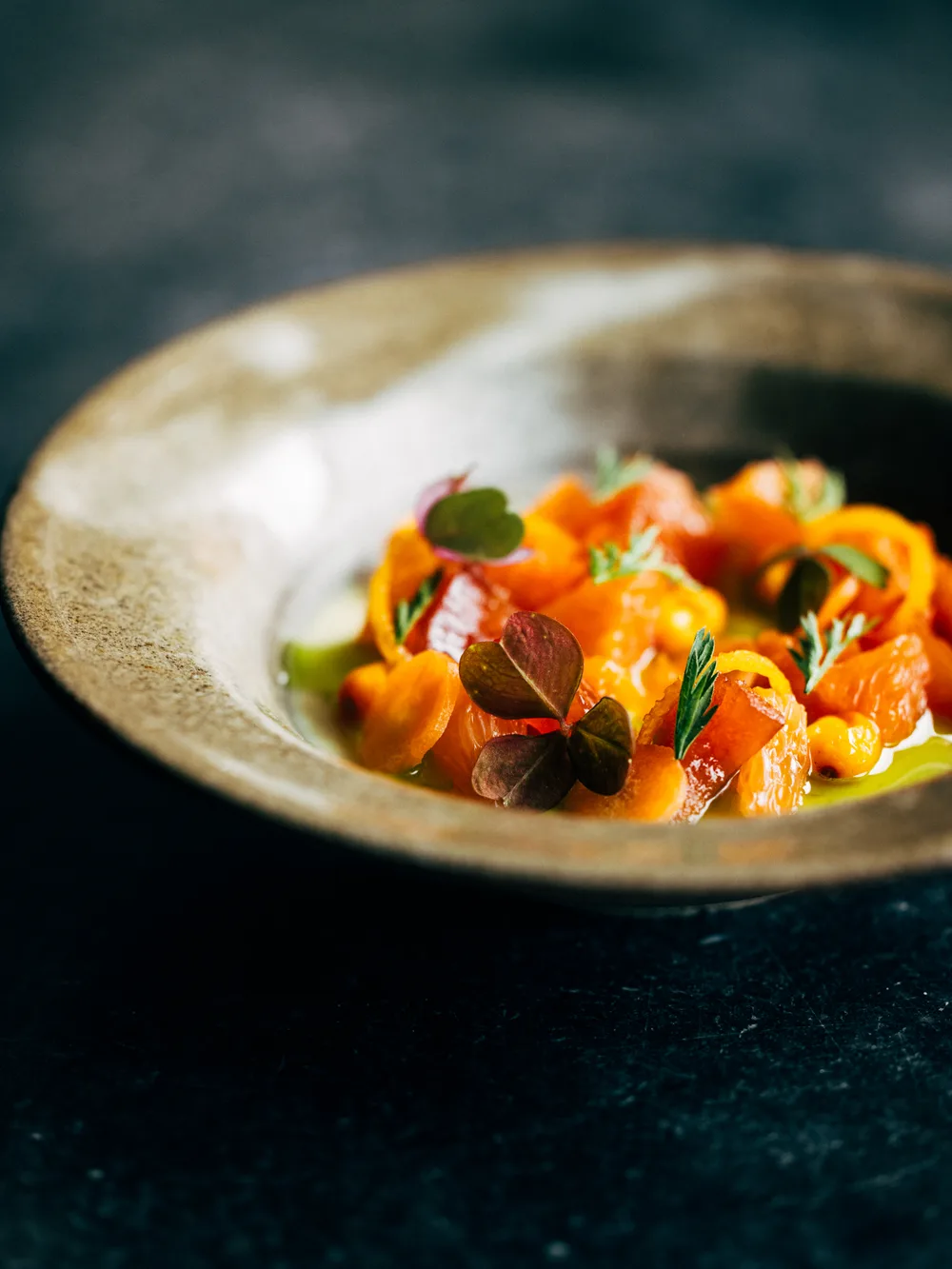
The daughter of a painter, she grew up surrounded by art, and this heritage is evident in her work. Her practice, she says, is a response to the digital age: she prefers the handcrafted object to the identically reproduced one. Just as you can recognize a chef's hand in a dish, you can recognize the hand of the person who threw it. Within the same series, there are variations. No two pieces are ever exactly alike, and that's not a flaw. It's the same variation as between two carrots in the same row. On a hand-thrown ceramic, the size, shape, and color vary from one batch to the next. With ash glazes, even more so.
She readily situates her work within a lineage. Just as the Arts and Crafts movement once responded to industrialization, her practice responds to digital technology. She also identifies with Mingei, the early twentieth-century Japanese movement that focused on the beauty of ordinary, anonymous, and popular objects, linked to a region and its natural resources.
One word is missing for her in our part of the world: artisan d'art. It perfectly describes what she does, somewhere between craftswoman and artist. Neither label alone suffices.
Four hands
She designs her most beautiful projects in collaboration with the chef. A true partnership. In practice, this often begins with a prototype, followed by discussions about textures, colors, and materials, until the perfect piece is found. In her personal work, she also creates spontaneously, without preliminary sketches.
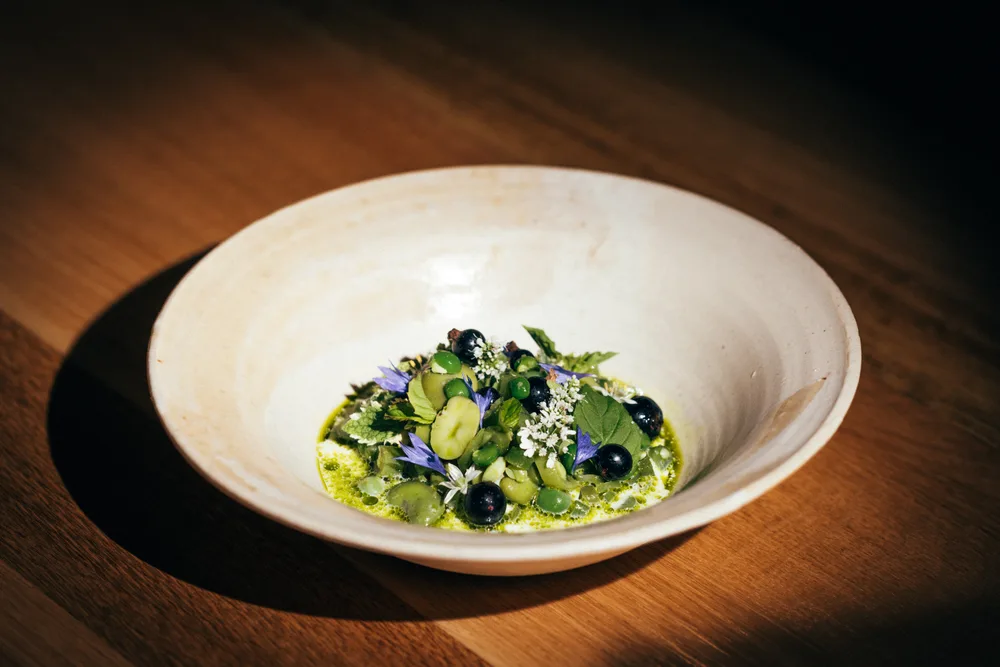
Because a plate shouldn't just be beautiful. It must serve both the kitchen and the dining room. A plate that doesn't stack well clutters the storage area. A plate that's too flat complicates serving. A surface that's too rough can be off-putting. For another establishment, it was essential to stay within the interior's color scheme. Understanding all of this is as much a part of the craft as centering the earth.
Working for restaurants is a demanding school. It requires consistency, regularity, and understanding the logic of a kitchen: its concept, its vision, but also the type of table and the gestures that are repeated, service after service.
The gesture and the use
There is a human element to this work, and it is not solely related to the manufacturing process.
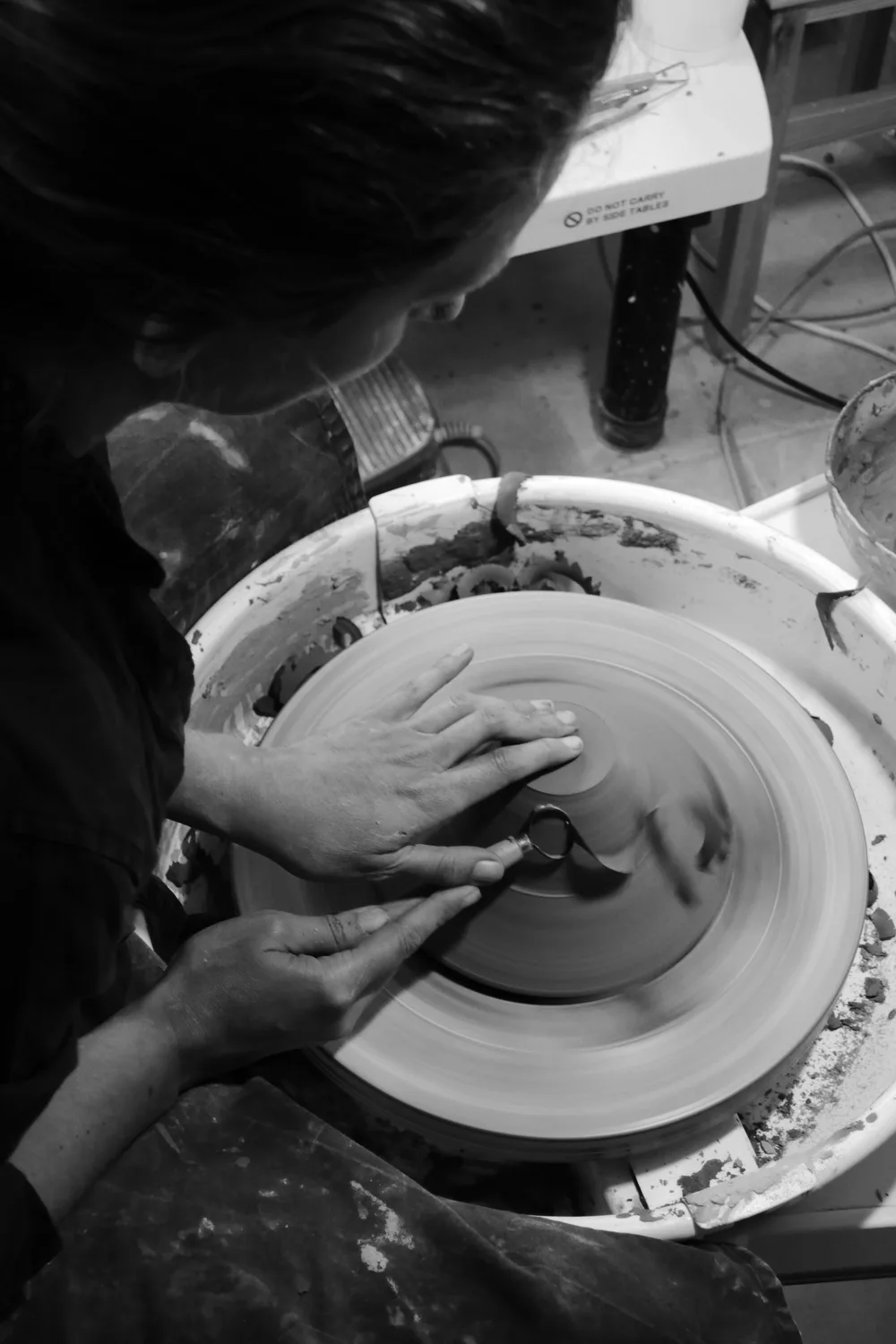
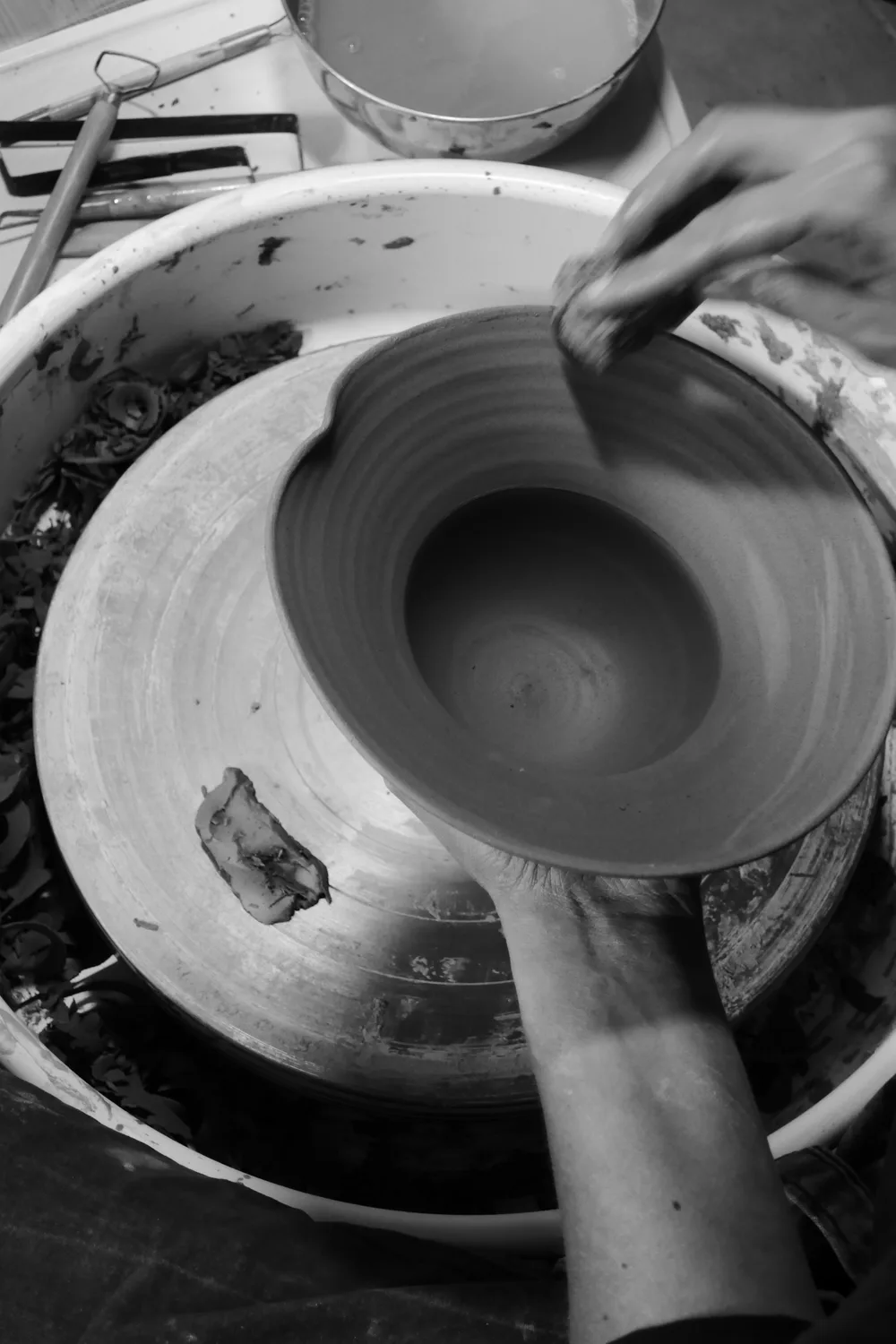
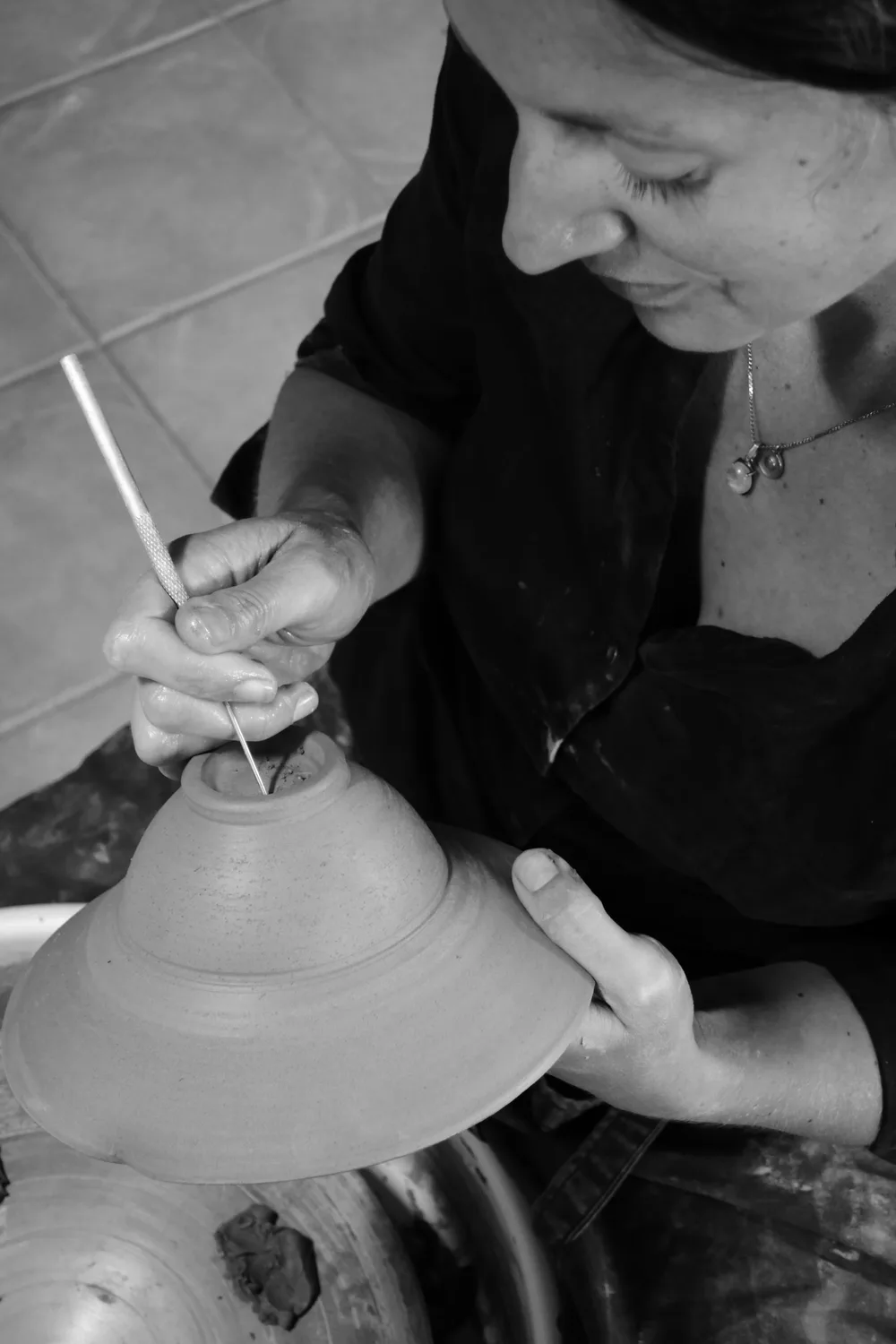
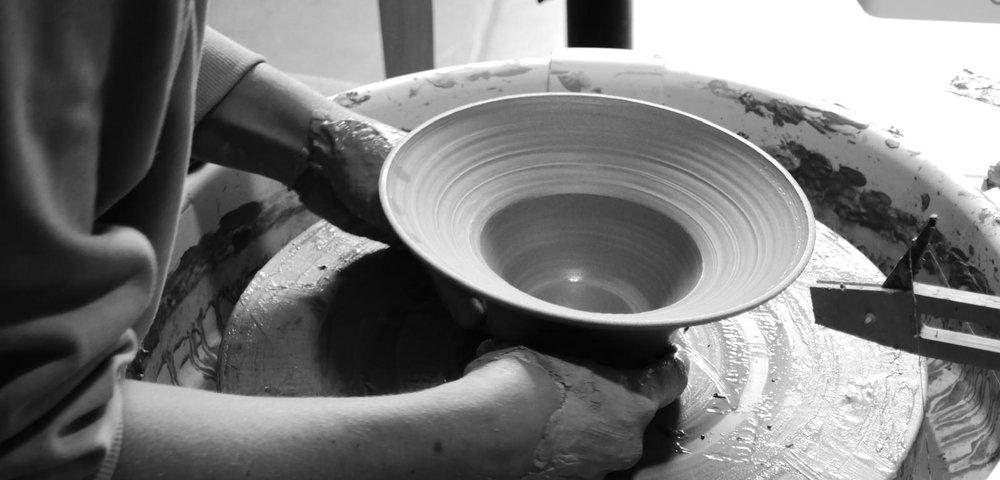
At the potter's wheel, Eva works from a place of presence. For her, throwing is a form of active meditation: preparing the clay, centering it, opening it up, hollowing out the void. She believes that the energy of the hand remains in the room. The clay guides as much as it is guided. Both shape each other.
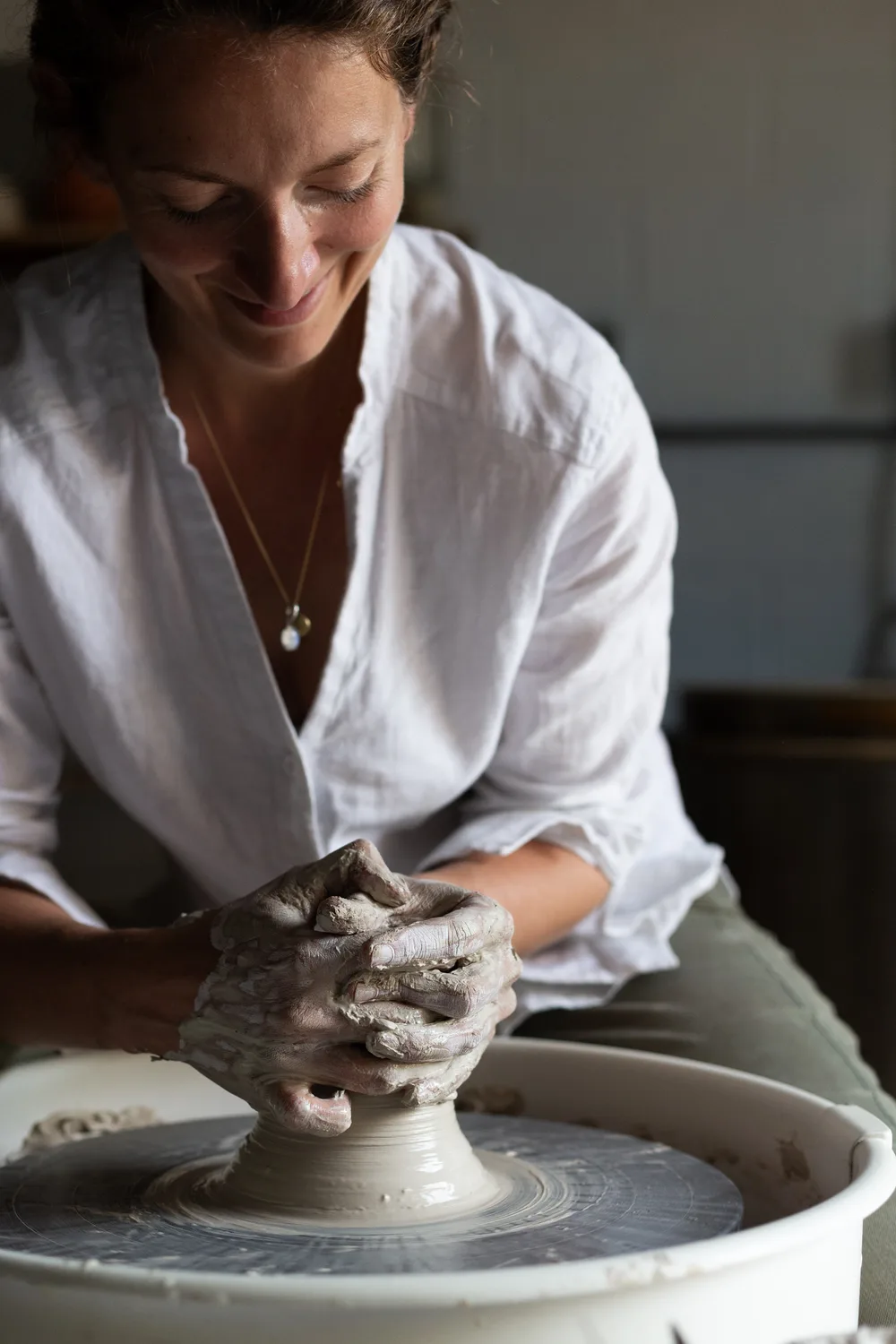
But the human element doesn't end at the workshop door. It's also present in the way things are used. In the care taken to plate a dish, to place a plate, to clear it, to wash it. In the respect shown to everyone who handles it, and in the respect shown to the object itself. A handmade piece deserves to be chosen consciously and treated with care, to last a lifetime, and perhaps be passed on to the next generation. An object only truly comes to life, she says, once it leaves the workshop, when its own story begins. That story passes through many hands.
A land that does not return
Eva thinks a lot about what she is doing exactly. Because she takes a natural material, earth, and transforms it into something irreversible.
She also wants to clarify a common misconception. We imagine ceramics as durable, but clay is formed very slowly through the erosion of rocks. It is not an inexhaustible resource. She reminds her students of this: you can't fire just anything, or in any old way.
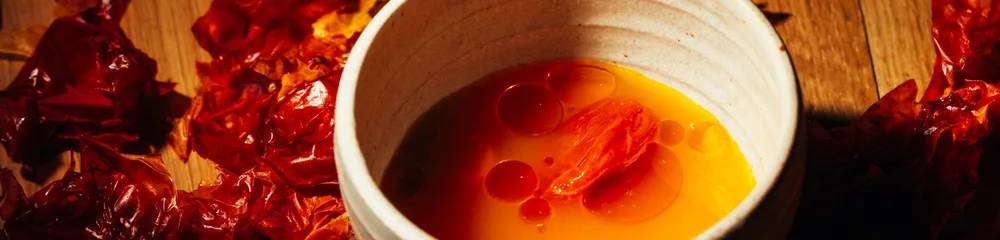
This observation guides her entire practice. Her stoneware comes as locally as possible, from the Argilières Hins in Belgium, with almost no intermediaries. She collects and recycles any leftover raw clay, even though the process is lengthy. The water in her studio is rainwater. Firing requires a lot of energy, as the stoneware reaches temperatures exceeding 1250 degrees Celsius: she therefore fires during the day using solar power, supplementing with green electricity. She creates her own glazes, using traceable oxides and, above all, wood ash, in a circular approach. The ash creates crackles, surface effects, and a natural touch. Foraged materials, wild clays, and salvaged waste interest her far more than 3D printing.
A new chapter is on the horizon. She wants to switch from an electric kiln to a wood-fired one. A significant choice, one that brings the craft even closer to the material and allows for greater unpredictability during firing. And this unpredictability is undoubtedly the most challenging aspect of her work, especially when experimentation and commissions are happening simultaneously. It is perhaps also its most rewarding aspect.
Time as matter
Time, here, is not a detail. It is a substance.
Eva respects the clay's natural rhythm and resists the prevailing rush. Restocking can take weeks. Sometimes much longer. For an order of ten soup plates, she spent three months searching for the perfect clay color. She didn't get it right the first time. But that's precisely where the expertise lies: searching until you find it.
The seasons play a role. In winter, it's colder, and drying takes longer. The rhythm of the workshop follows that of the outside world. For her, it's less about fighting against time than about constantly seeking balance with it.
Because she works with ash, and each batch of ash is a kind of vintage, never quite identical, she now maintains a reserve for each client and each type of tableware. This way, a plate ordered again in a year will still match those of today. It's the logic of wine: no two vintages are alike, and yet one wants to remain recognizable, faithful to the same hand.
Surviving together
Tradition and local culture, in all their forms, also mean helping each other to survive. It benefits everyone.
Some customers have become more than just customers. They've become ambassadors. Not out of politeness, but because they want Eva to still be there in five years, crafting new dishes with the same care. They know that a successful meal depends not only on the cook and the farmer, but also on the person who creates the plate where everything comes together.
The plate belongs to the same fabric as the field and the kitchen. It comes from the earth, passes through many hands, and, when it's done right, it lasts. Eva hopes, she says, to help slow down a little and reconnect with the essence of objects. That, very concretely, is what everything rests on.
Today, in fact, she is back in the studio, working on a new series for Neon.