Belgian Saffron, Morkhoven · Humus x Hortense, Elsene
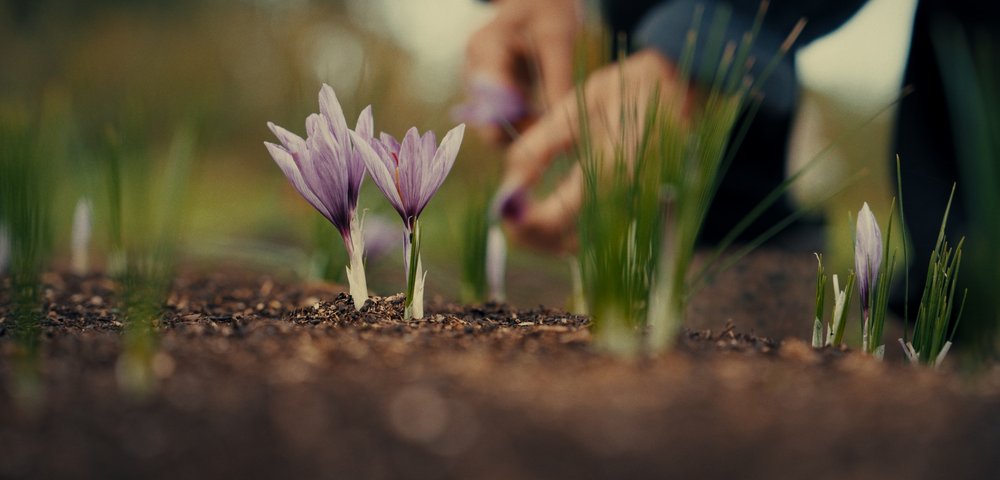
On a field in Morkhoven, on the outskirts of Herentals, a purple carpet unfolds every autumn. Linda Van den Bulck and Marc Leloup have been growing saffron crocuses there since 2012, and during the flowering season, the sun dictates their workday. Half an hour after it falls on the field, the flowers are open and must be picked.
The Crocus sativus is an outlier among the crocuses. While the rest bloom in spring, it waits until autumn, and the sandy soil of the Kempen suits it well. What it yields is minuscule: three red pistils per flower, of which only the bright red part above the split counts. Separating them is called bleaching , and it is done by hand, thread by thread. About two hundred flowers are needed for one gram of saffron.
An autumn that comes later
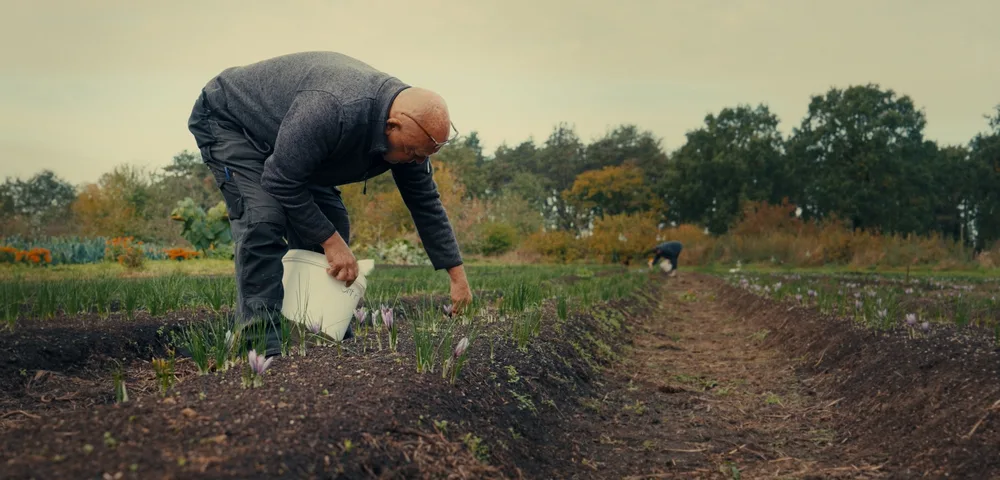
The weather decides when the flowers appear. The bulbs are planted in the ground in the summer and remain undisturbed until the temperature drops. Only then do they shoot up, and the flowering lasts four to six weeks. Heat and drought hold everything back, while cold nights give the signal.
That makes every harvest different. A few years ago, it never really got cold enough, and the harvest turned out smaller. In 2024, the problem lay in the spring: wet, cold, and a June that didn't cooperate either when the flower buds were forming. Linda and Marc then shifted the calendar around and didn't plant some of the bulbs until early September. They bloomed profusely, and the picking extended over more weeks.
This year, autumn began as a long Indian summer, after a bone-dry July. On the permeable sandy soil, they see the flowers come to life after every rain shower. Adapting to the climate is simply part of the deal by now.
From Brittany to the Kempen
Saffron was never on their life plan. Linda and Marc were born in Antwerp, and when they ended up in Morkhoven, there was land around the house that needed a purpose. Mowing grass and trimming hedges didn't appeal to Marc much. They found the idea while traveling in Brittany, with a psychologist who had started growing saffron there.
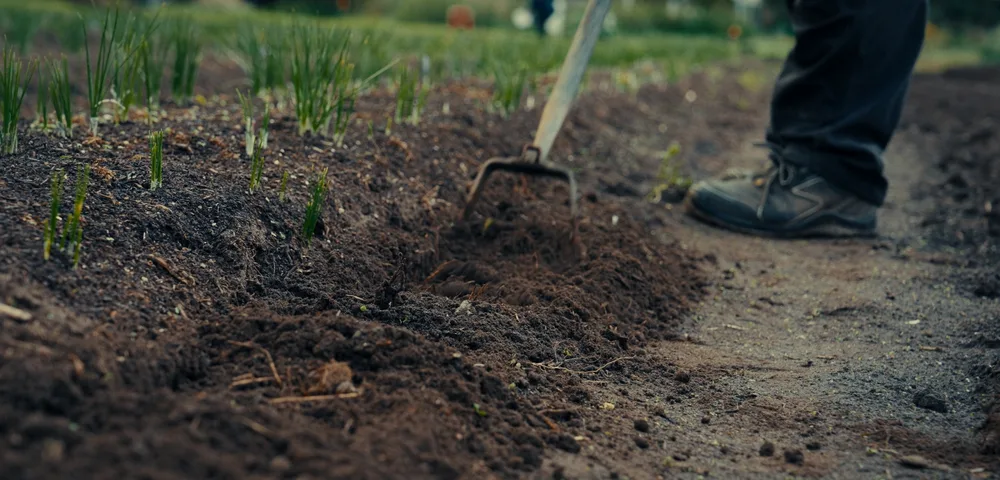
At home, they investigated whether the crocus would also take root in the Kempen region. They planted a thousand bulbs, with little more than a hunch. They would have been satisfied with three hundred flowers. In the first year, they counted 529, enough to found Belgian Saffron in 2013. They themselves had never seen it coming.
Until it is dark
During the flowering season, one rule applies: every day, all open flowers must be removed from the field. Picking keeps the bulbs awake. On short autumn days, this means working until well after sunset, with a headlamp on your head.
Anyone who has ever experienced it remembers above all the scent, a heavy, sweet floral fragrance unlike anything else. And the silence. While picking and counting, flower by flower and field by field, conversation naturally fades away. "A little Zen moment," they call it themselves.
You can taste the soil
Linda and Marc place the difference between this and other saffron at the soil. Marc cultivates without chemicals and builds a living soil food web.
"If you have healthy soil, you get different growth above ground," he says. "The soil helps determine the taste."
For him, terroir extends beyond the harvest, because how the threads are dried and stored carries just as much weight.
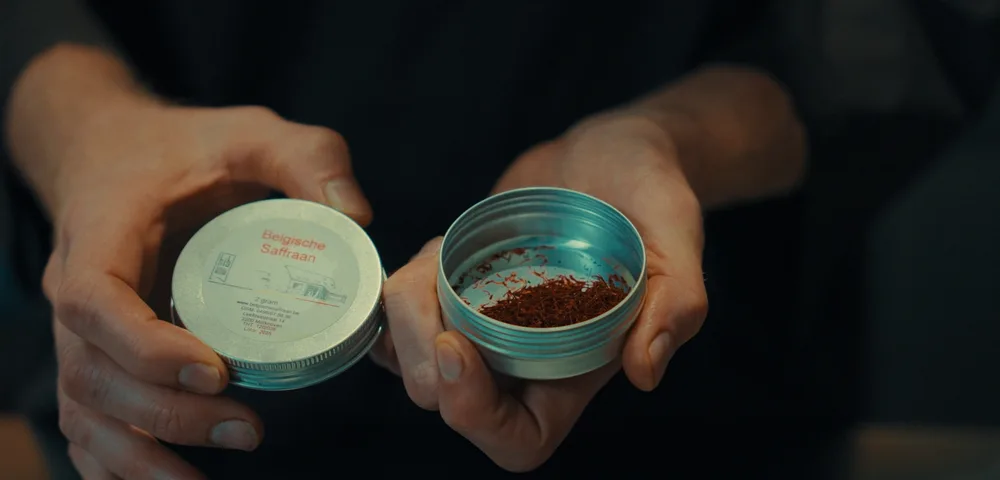
After drying, two grams remain from ten grams of fresh stigmas. These are placed in a glass jar and rest in the dark for another two months. Saffron ripens: when young it is soft and fruity, but with age it becomes more robust.
Forty-eight hours
On Vergniesstraat in Ixelles, Caroline Baerten and Nicolas Decloedt run Humus x Hortense, a plant-based restaurant. Nicolas works in the kitchen, Caroline in the dining room, and she makes the ceramics on the tables herself. Their botanical gastronomy, as they have called it since 2008, follows twenty-four micro-seasons and the harvest from Le Monde des Mille Couleurs, Dries Delanote's wild farm. The restaurant's name refers to humus, the fertile layer of the forest floor. It is fitting that their saffron comes from a grower who bases his entire cultivation around that soil.
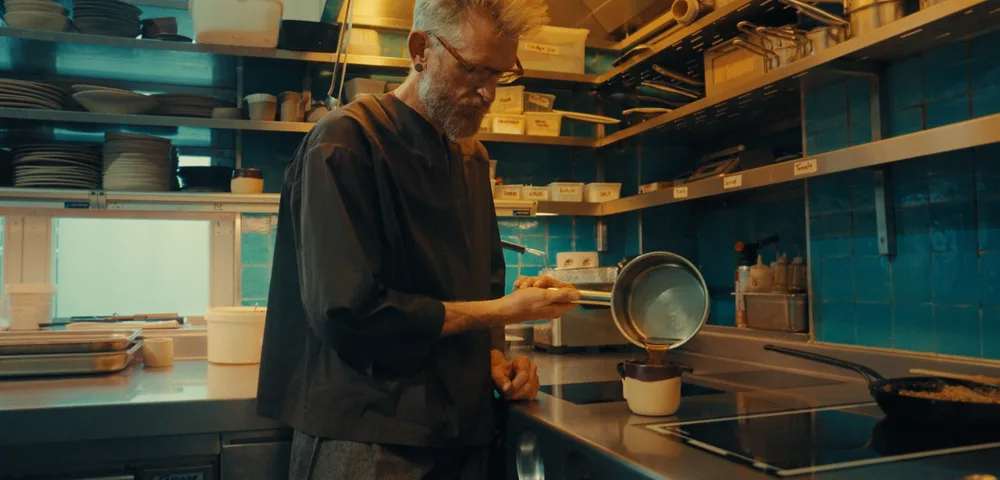
It wasn't love at first sight. Nicolas didn't care much for saffron until he realized he had never tasted a good one. He overcame his prejudice, contacted Morkhoven, and since then their saffron has been on the menu year after year, as one of the few staple ingredients.
He uses it in a broth that is served as the final savory course, the hinge toward the dessert. Belgian Saffron recommends soaking the threads for at least four hours, preferably a full day. In Ixelles, the broth is left for forty-eight. As soon as the saffron is added, the flavor shifts to a full, warm, and floral profile.
A plant-based cuisine has to do without caviar or lobster, the products that usually stand for luxury.
"For us, luxury is time," says Caroline.
In this kitchen, it is a sum: three threads per flower, each flower picked by hand, two months resting in a jar, two days in the pan. She recognizes that same attitude in Morkhoven, with two people who pick every pistil by hand.
The team on the field
Several times a year, Caroline takes the team to their producers' fields, including Morkhoven. The team is international, and not everyone is familiar with Belgian ingredients from home. Those who have worked in the fields know where the product comes from. "We know all our producers personally," says Nicolas. A good product alone is not enough; there also has to be a personal connection.
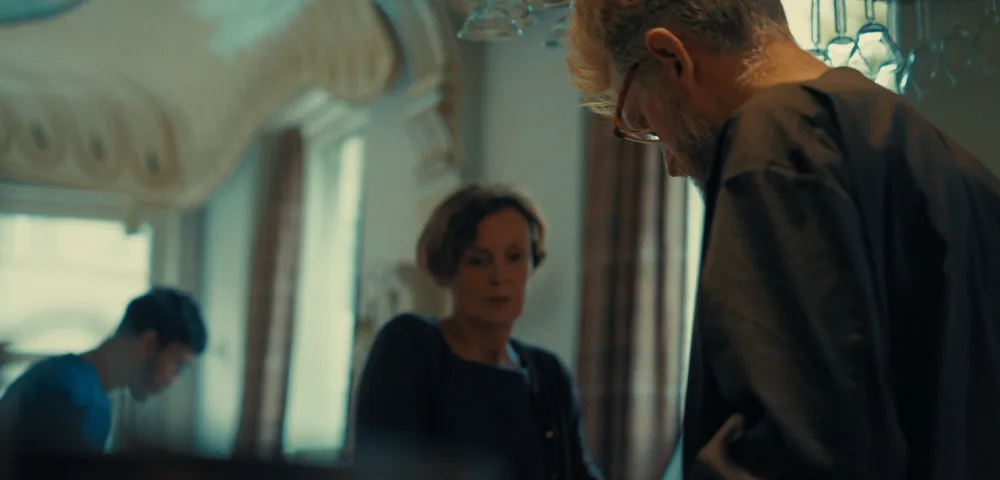
Viewed from Morkhoven, it is by no means an ordinary supplier list. Linda and Marc ensure that the restaurant has their saffron available all year round, and they particularly appreciate the vision in Ixelles and the respect for their work. When Belgian Saffron celebrated its tenth anniversary in 2023, a book was published featuring recipes by Linda and fellow chefs, with Caroline and Nicolas contributing to it as well. They call it an ecosystem themselves, in which everyone depends on one another and does their best for the other.
Every autumn in Morkhoven, the flowers open again, half an hour after the sun shines on them. Towards evening, a headlamp switches on and a count is taken, in silence. Two months later, in Ixelles, a broth begins its forty-eight hours.