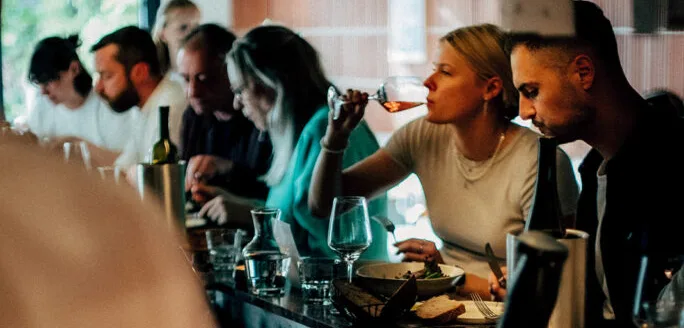
On E. Van Beverenplein in Ghent, Sunday morning sets itself in motion even before most doors open. Market stalls are being set up, bicycles lean against facades, and the Bloemekenswijk gets going at its own pace. At number 16, behind the preserved blue tiles of a former pharmacy, the doors of restaurant Elders open at half past ten. Not for dinner, but for what the establishment calls 'Anders op zondag' (Different on Sunday): a free Sunday stop for those coming from the market, or just heading there.
It is a simple gesture, and that is precisely why it works. A restaurant that operates mainly in the evenings during the week chooses to lower the threshold one day a week and let the rhythm of the neighborhood in. Coffee at the bar, a glass of natural wine, a handful of oysters, or an extensive menu—it is all allowed to coexist under the same roof.
A house that connects with its square
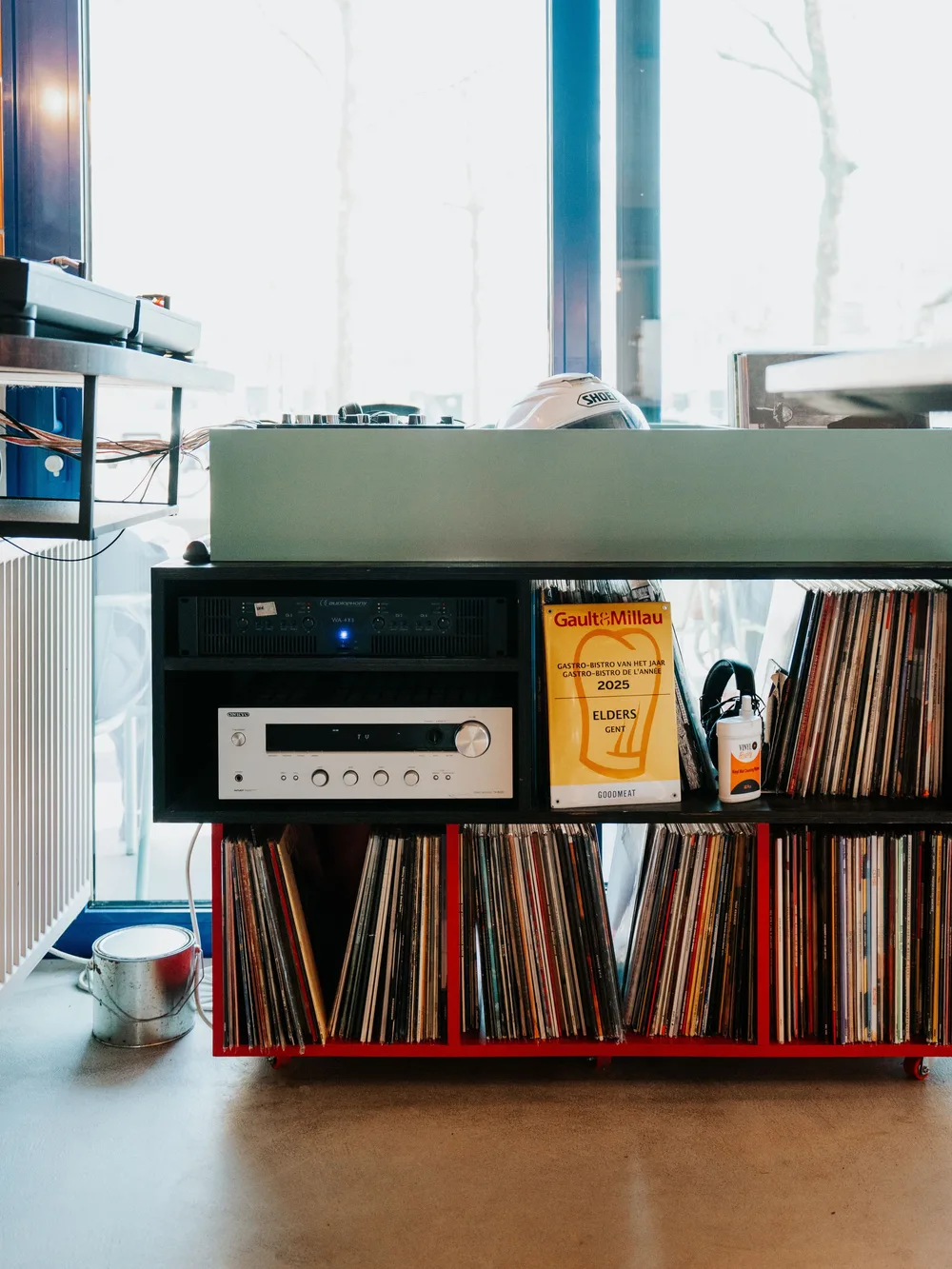
The E. Van Beverenplein is not an anonymous place. The Sunday market has been a fixture here for years and gives the Bloemekenswijk its own voice during the Ghent weekend. Elsewhere consciously aligns with this. Between Wednesday and Saturday, the restaurant operates on fixed lunch and dinner services, featuring a seasonal six-course menu and a three-course lunch on Thursday and Friday afternoons. On Sunday, the pace shifts. The bar opens at 10:30, the kitchen from 12:00, and those wishing to join for the full six-course menu can do so on Sunday afternoon as well.
What stands out is that on Sundays, the establishment does not try to be anything other than what it is. No separate brunch menu to appease the casual visitor, no reworked concept. The same kitchen that serves out a detailed menu on Saturday evenings does exactly the same on Sunday afternoons, with additional space for à la carte at the bar for those who are less hungry or have less time.
The open kitchen counter as an anchor point
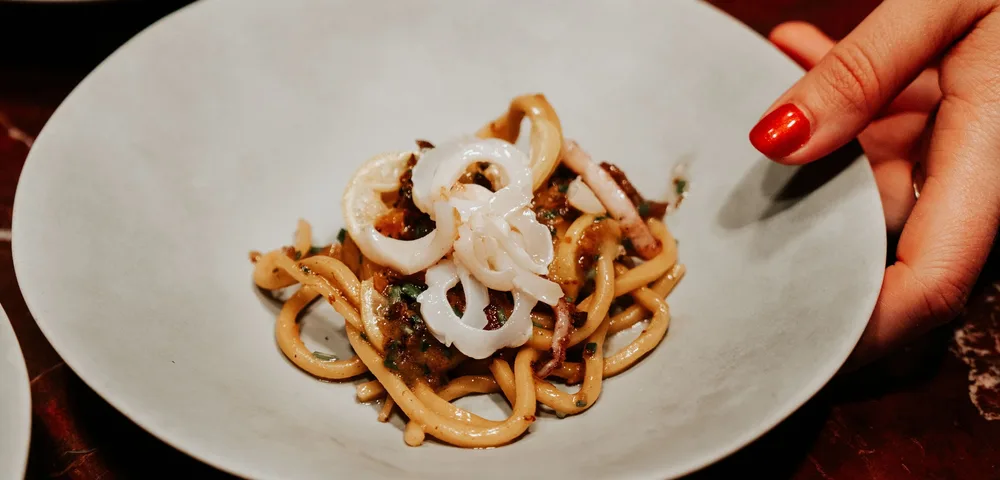
Those seated at the bar sit at eye level with the kitchen team. This is not a decorative choice. It makes the work visible to the guest and transferable within the team. Tom Pauwelyn runs the kitchen, and the approach is best described as restrained. Seasonal vegetables take center stage when available. White asparagus with vin jaune, cockles, and razor clams on the spring menu, or tortellini in brodo with North Sea crab and zebra tomato—these are dishes that need no explanation for their origins.
When animal proteins appear on the table, they are served with the same care. Grass-fed chicken in a supreme, sea bass with green asparagus, or a vegetarian alternative of beetroot and tarragon. The menu reads more like a seasonal note than a fixed list, and changes according to what is available and ready to be used.
Natural wine and the glass as an extension
Sommelier Romy Deconinck takes care of the glass. The wine list focuses on natural wines from small-scale producers who work without synthetic interventions in the vineyard and with minimal intervention in the cellar. For those walking in through the bar, this is an accessible way to get acquainted with a wine style that remains underexposed in restaurants. A glass, a brief explanation, and the guest decides for themselves how far they want to go.
The bar operates independently of the restaurant. Between Wednesday and Saturday, it opens at six in the evening, with the kitchen following from seven for an à la carte selection. On Sunday, that rhythm shifts to ten-thirty to five in the afternoon. No reservation is required; walking in is sufficient. This is deliberate. Not every visit needs to go through an online form.
Attention within workable limits
A restaurant that wants to operate at a high level in the evenings and remain open to the neighborhood on Sunday afternoons runs the risk of trying to serve everyone and not do anyone good. Elsewhere chooses a different route. The establishment closes on Mondays and Tuesdays, and the bar follows the same pattern. Lunch is served only on Thursdays and Fridays. It is a limited menu of opening hours, not a broad one, and precisely because of this, the attention remains where it belongs: on the plate, on the glass, on the guest sitting at the bar.
That choice for sustainable work rhythms is visible in the dining room. Even on a busy market Sunday, the atmosphere feels calm. The staff has time to explain what is being served, guests are not rushed, and the pace of a meal remains the pace of a meal.
A neighborhood at the table
The concept of an open Sunday opening is not new in the Ghent hospitality scene, but Elders gives it its own unique interpretation. The establishment presents itself not as a brunch spot or market café, but as a continuous space where the market outside and the kitchen inside intersect. Anyone who has just bought vegetables in the square can step inside for a coffee without feeling out of place. Those in the mood for a full menu sit at the same counter, just a few meters away.
In this way, Sunday at Elders becomes more than just an extra opening day. It is a weekly appointment in which the establishment redefines its connection with the Bloemekenswijk. Not through grand gestures, but by being open at the moment when the neighborhood itself is visible. For a restaurant centered on seasonal produce and honest products, that is a logical place to be. The market provides the rhythm, the kitchen does the rest.