
Redefining value in our kitchen
Have you ever looked at a vegetable peel and seen a sauce? Or at stale bread and thought of a savory cracker? In our kitchen at Neon, located in the heart of Lier, we don't see bins full of leftovers. We see ingredients waiting for their second life. To us, what many call "waste" is simply a lack of imagination. Joining the oriri community feels like a logical step for us because we share a deep conviction: food is a story. It is a narrative that connects the earth to the plate, and the farmer to the guest. Today, we want to share a chapter of our story that is close to our hearts: our no-waste philosophy. It is not just about being environmentally conscious; it is about discovering flavors, respecting nature, and building deeper connections with our community.
A creative journey, no limitations
When Chef Nils Proost says, "Waste is just an opinion," he presents our entire team with a challenge. It forces us to look at every product entering our kitchen with a fresh perspective. We ask ourselves not only, "How do we prepare this?" but also, "How do we honor the whole?" This mindset shifts our view from limiting to liberating. Suddenly, the "ugly" parts of a vegetable become the most interesting. We have discovered that peels, roots, and leaves often contain the most intense flavors. By not throwing them away, we not only save money or the environment; we discover new flavors that we could never create with the "beautiful" pieces. It is a collaborative process. Our team collects, experiments, and shares ideas. One person suggests fermenting a stem, while another suggests drying it. This shared creativity creates a bond in our kitchen that permeates the dining room. When we serve a dish, we are not just serving food; we are sharing the result of our collective curiosity.
From waste bin to plate: the alchemy of leftovers
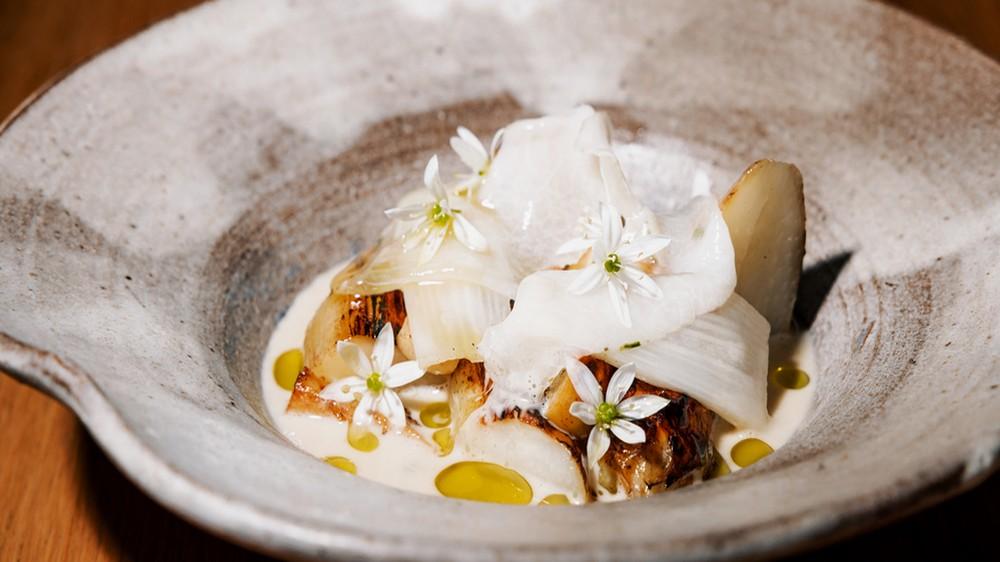
Let's make it concrete. What does this philosophy actually taste like? Take the humble white asparagus, a jewel of our local sandy soils. In a traditional kitchen, the peels are discarded without hesitation. At Neon, we ferment those peels. Over time, they transform into a rich, salty liquid that rivals the best soy sauce. We use this "asparagus shoyu" to season our fish dishes, such as North Sea skrei. It adds an umami depth that connects the seasons—using last year's harvest to elevate today's catch. We apply this alchemy throughout the menu:
- Stale bread: Instead of throwing away excess bread, we turn it into a base for miso or bake it into crispy crackers with seeds and herbs.
- Coffee grounds: The remnants of your morning coffee end up in our desserts, where they add complex bitter notes that balance sweet elements.
- Vegetable trimmings: Celeriac peels are smoked, dried, and ground into powder. This "vegetable ash" becomes a powerful seasoning that imparts a smoky, barbecue-like intensity to vegetable dishes.
Every time we save an ingredient, it deepens our bond with the product. It is our way of thanking the farmers who worked so hard to grow it.
Moving with the rhythm of the land
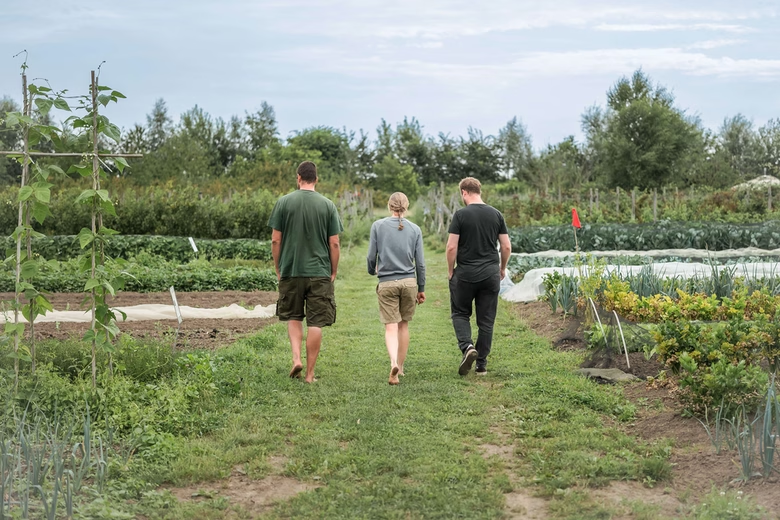
Our no-waste approach is deeply connected to our respect for time. We don't just follow four seasons; we follow five micro-seasons. By dividing the year into smaller chapters—such as the specific weeks when wild garlic blooms or the first summer berries ripen—we can cook with hyper-seasonal precision. This rhythm determines our menu. We work closely with local partners, such as the Vercammen brothers in Koningshooikt. We walk through their fields, discuss what grows well, and adjust our plans immediately. If a crop stops early, our menu changes instantly. This flexibility is crucial for sustainability. In this way, we never demand products that the land cannot provide. By preserving ingredients through fermentation and pickling, we can carry the flavors of an abundant micro-season into the lean winter months. It is a way to extend the harvest and ensure that nothing the earth offers goes to waste.
Building a community of conscious consumption
Ultimately, our restaurant is about people. We want our guests to feel the same excitement as we do when we discover a new use for a leftover ingredient. We share our techniques openly, not to preach, but to inspire. We want you to look at your own kitchen scraps differently and see the potential in the everyday. Platforms like Oriri are essential to this mission. They enable us to connect with you outside the walls of our dining hall in the old Normal School. We can share our challenges, breakthroughs, and passion for a better food system. We are building a community here; one that prioritizes authenticity over perfection, and connection over consumption. We invite you to join this conversation. Whether you are dining with us at Neon or experimenting in your own kitchen, remember that every ingredient has a story. It is up to us to ensure it is a good story.