
It is becoming increasingly clear that the food industry as a whole is suffering from collective cognitive dissonance. By consistently focusing attention on the food product itself and its quality, attention is diverted away from the production of the raw materials. In the case of wine, people talk about additives such as sulphites, while ensuring that as little attention as possible is paid to the elephant in the room: the use of fungicides. An individual consumer who ingests too many sulphites faces a personal issue, not a collective one. An entire wine region that drives through its vineyards with fungicide sprayers up to 25 times a year is clearly creating an enormous collective problem, without the consent of local residents. And that is before we even address the ecological damage, such as the near-extinction of insect populations and the disruption of wild fungi, without which an ecosystem collapses entirely. One could justifiably call it a ticking time bomb.
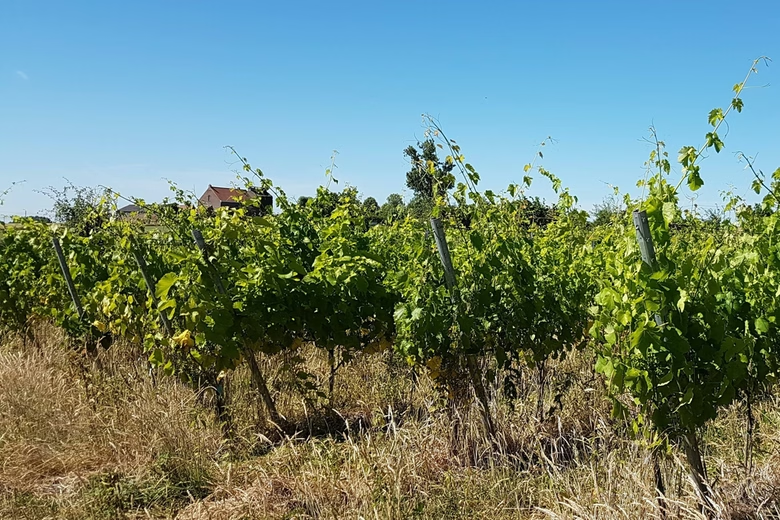
The problem with this elephant in the room is that it has become a massive taboo even for the most “ecological” labels on the market. In both organic and biodynamic agriculture, it is assumed that grapes cannot be produced without crop protection against fungal diseases. Because they want to place emphasis on the natural aspects of the production method, the choice is made to use only substances that also occur in nature. In viticulture, that mainly means Bordeaux mixture: a blend of copper sulphate and spray sulphur.
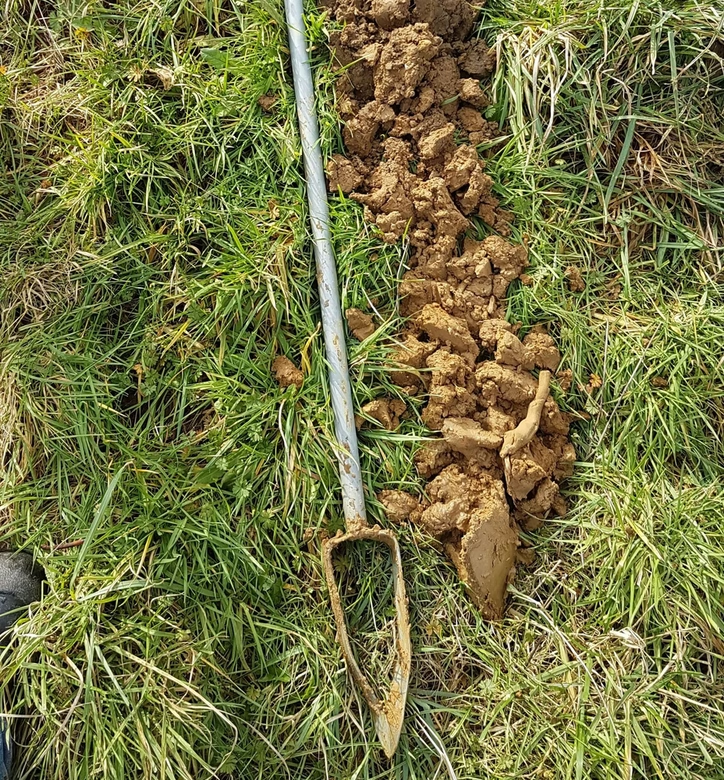
Copper sulphate is a copper salt with a preventive effect against downy mildew. It therefore has to be applied preventively to the leaves to prevent the fungus from penetrating the cells. So every time it rains, it must be sprayed again, otherwise the protection is lost. This is extremely counterproductive because fungi function best precisely when copper sulphate is hardest to keep in place and when the soil is most vulnerable to compaction in tractor tracks. Copper (a heavy metal with high toxicity) then accumulates in the soil, never to disappear. Many try to limit this by using lower doses, but then it is simply a matter of time before it becomes problematic.
Spray sulphur is dissolved sulphur that mainly protects against powdery mildew. It is likewise a preventive product that must be continuously present on the leaves. It therefore has the same problem as copper sulphate and must be repeated regularly in rainy conditions. This product can be considered a form of sulphur fertiliser, so it has lower long-term toxicity. However, immediately after application it also has side effects on mites and insects. As a result, the balance in the world of spiders and insects is severely disrupted.
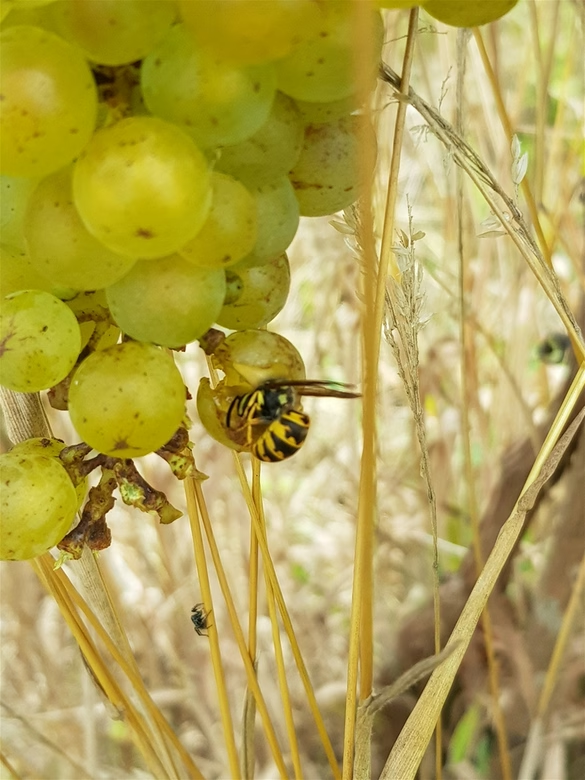
Because of this way of working, almost everyone has become convinced that you can choose not to use herbicides or insecticides, but that doing without them is impossible when it comes to fungal diseases. The consequence is that this issue is systematically swept under the carpet for the general public. People act as if the use of anti-fungal substances has become an unavoidable given. Yet in natural selection, such problems are selected out: sensitive varieties disappear in favour of new crossings that possess a better internal defence mechanism. This principle of natural selection can in fact be seen in all branches of agriculture in the form of seed selection. Breeders select seeds that best match the ad hoc situation in nature. That may be drought resistance, yield, insect resistance, and also fungal resistance. Every year, plant breeders run thousands of experiments to bring the best-adapted varieties to market.
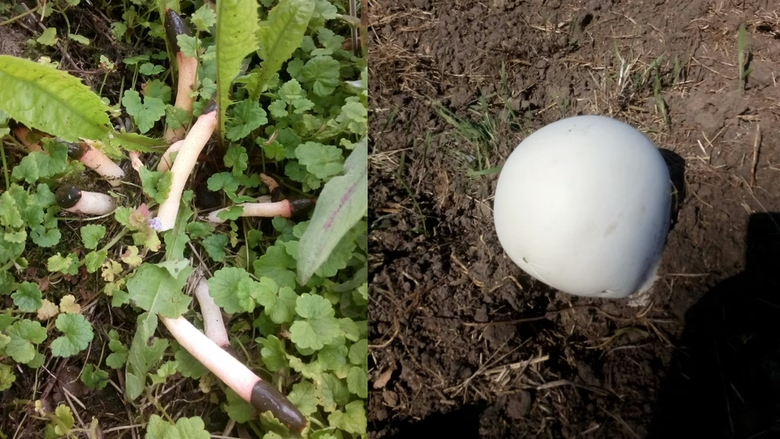
There is one sector within agriculture that follows precisely the opposite line of reasoning: viticulture. Only Vitis vinifera produces good wine, and crossings with other American or Asian species are therefore deemed unacceptable. The result is that an entire industry has been built around a raw material that can no longer sustain itself in nature. Leave a Chardonnay unsprayed and by the end of June it no longer has any leaves at all. The consequence is an ecological disaster. The most degraded soils are found in the Grand Crus. Parkinson’s disease has been recognised as an occupational disease among winegrowers as a direct consequence of fungicide use.
For us, the consequences for the health of farmers and local residents are obviously extremely important, but even more important is the bigger picture of the total ecosystem in and around these vineyards. A consumer’s palate is shaped by habit and by the fashions of the time. The classic Bordeaux style that for so long formed the standard of what wine “should” be has today fallen entirely from its pedestal, in favour of light, playful and fine wines. New generations can, in other words, adapt their tastes. Changing these social patterns is vastly easier than keeping alive plants that, in effect, want to disappear.
This brings us to the selection of new grape varieties that no longer produce exactly the same flavour profile, but are, on the other hand, far more resistant to the fungal diseases that are now commonplace. Vitis vinifera is therefore simply crossed with American or Asian grapes that carry genes conferring fungal resistance. This carries a risk of undesirable flavours such as the foxy aromas associated with American varieties, but also, equally, very floral aromas that may in fact be appreciated. For the modern winegrower, the task is therefore to search for varieties with which they can produce a fine wine without crop protection.
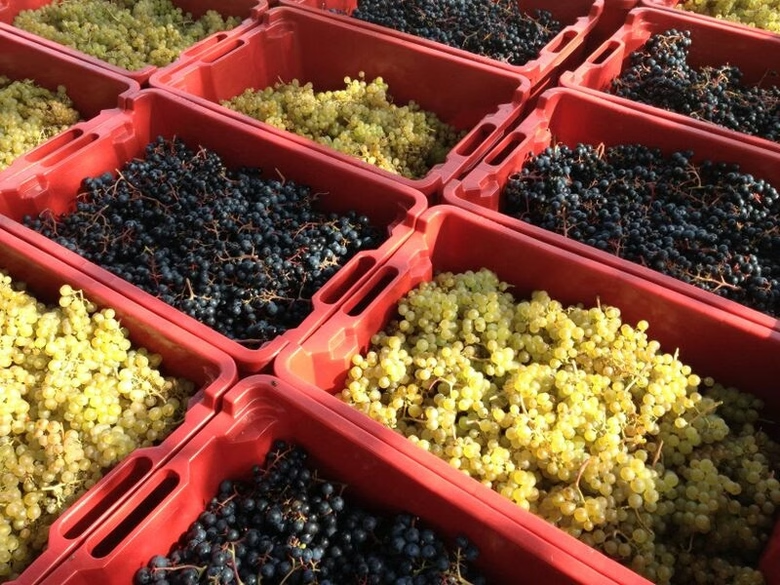
The use of resistant varieties brings about a true revolution in terms of ecology in and around the vineyard. That is where we must focus our efforts today. The fact that individual farmers are currently under enormous pressure and are almost always the scapegoat should not cause us to turn away from the ecological catastrophe unfolding alongside it. And populist rhetoric, such as we see in the nitrogen debate, will change nothing at all. If we continue in this way, all our fertile topsoil will be washed and blown away, and we will be left with bare parent rock. The question is not if, but when we reach that point. And if one looks at the more southern European regions, one can see that desertification is already well under way. We benefit from more rainfall, which creates the impression that things are improving, but after every period of rain you see rivers and canals turn brown. That brown colour is literally the fertile fraction of a collapsed soil structure, as a result of tillage, artificial fertiliser and pesticide use.
In summary, we want to practise viticulture while, in the very same act, boosting the local ecosystem, storing carbon, improving the landscape, and saving significant costs. But that is not possible without structurally addressing the elephant in the room: the right genetics in the right place. If one is not prepared to change varieties regularly, there is no solution to viticulture’s environmental problems.
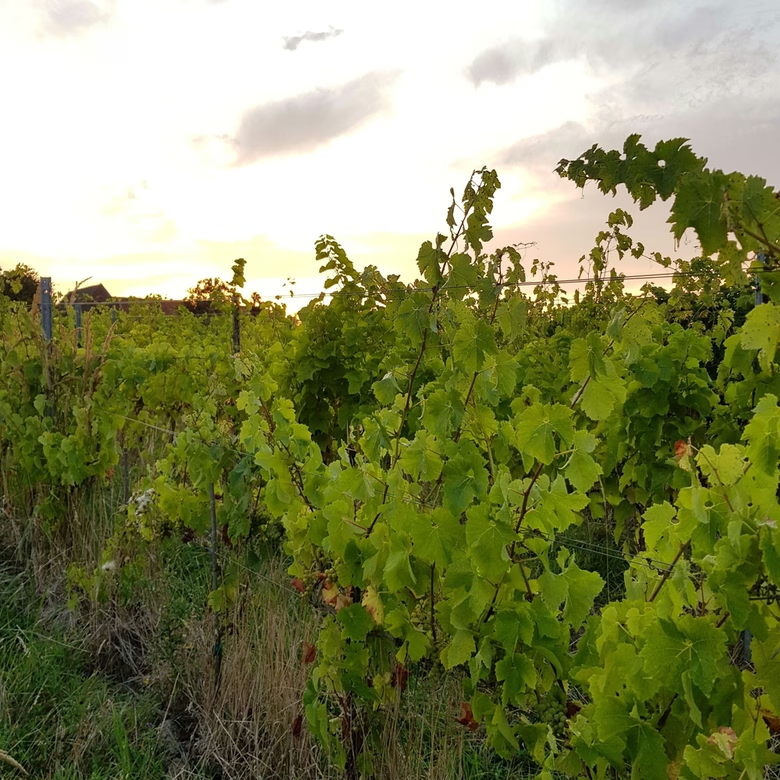
Lijsternest has had the courage to choose this path decisively and is gaining increasing experience in how, with these varieties, one can arrive at a fine product. The grapes are improving year by year. We want to support everyone who wishes to follow this path, and to assist with advice and practical help. Together with a number of other pioneers in this field, we have founded an association focused on viticulture without Vitis vinifera and using only PIWI, ResDur and old hybrids. No pesticides are permitted either.
https://www.facebook.com/p/BWAasblvzw-61575880573325
/https://www.instagram.com/bwa.vzw.asbl/