
Over the past few weeks a few things have landed with me—things that both don’t surprise me and, at the same time, do surprise me. Mostly because of how effortlessly we all return to business as usual, starting sentences with: “Yes, but…”
The baseline is set by the polluters
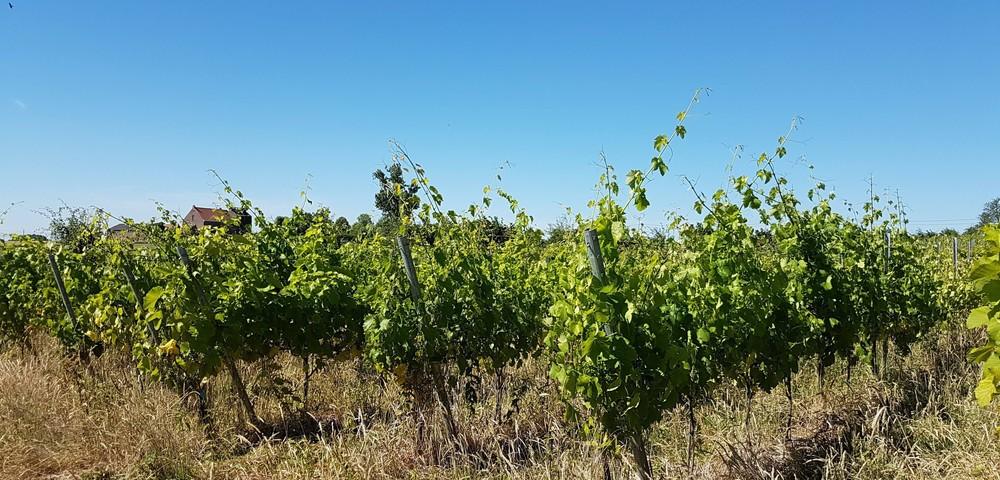
We operate literally without discharging wastewater: everything is absorbed by our own vineyard. We also don’t use toxic cleaning agents, and everything passes through an IBA system before it reaches the vines. For work in the vineyard we use a small wine-growing tractor which, over 5 hectares and an entire season, consumes about 40 litres of diesel—i.e. not even a single tank for an average diesel car.Other equipment we use: one peristaltic pump that runs for one week per year; one compressor for the bottling line that’s active for two weeks per year; a tabletop labelling machine; an insect lamp that is only on during vinification; and—fair enough—an electric forklift that gets charged twice a year when the solar panels are producing a surplus.What frustrated me was realising that polluters are treated as the baseline, and that if you do better, you’re the one expected to justify yourself.
Flowers, incense, and cultural blind spots
I didn’t respond, of course, because we all know how sensitive that territory is. Criticising a bouquet is about as bad as failing to notice she’s been to the hairdresser. Giving flowers is an expression of appreciation. And whatever sits behind the curtain—the hidden costs—apparently loses out to the cultural value of the gesture.The days when flowers came from a local cutting garden, with a few insects thrown in for free, and when people were content with dried flowers in winter—those days are long gone. Today, winter or summer, those flowers come from East Africa and are flown into Schiphol. The cultivation methods are difficult to justify in the context of the environmental crises we’re facing. With pesticide use, they become—quite literally—highly toxic items, dragging a trail of externalities behind them.At that point I’d honestly rather receive a heartfelt hug from my guests than a bouquet.When we arrived at the party, the first comment—after the obligatory “What lovely flowers”—was: “And it smells amazing in here… are those incense sticks?”And just like that, the second item that had been circling my mind came up sooner than expected. Those “lovely” incense sticks—little atmosphere enhancers. To a rationalist like me they’re simply objects that pump large amounts of polluting substances into the air, producing much the same effect as passive smoking.
We import environmental problems and call it “growth”
By now we all know the repeated ecological disasters that were consciously engineered—think asbestos, “forever chemicals”. Not a word from the winegrowers’ camp beyond the familiar mantras: “You can’t grow Vitis vinifera without fungicides,” and “You can’t make good wine from other varieties.” And from the journalist: not a mention of alternative initiatives.So we choose to make limp copies of existing products—keeping the same ecological dilemma alive—instead of building a distinct identity around something unique and genuinely innovative. With Belgian viticulture, we have effectively imported an existing environmental problem.
The missing line in the accounts
What if a multinational chocolate company were held 100% responsible for packaging that ends up in nature—would they still wrap so many products individually in plastic?What would happen if every entrepreneur could book ecosystem services as an asset, while all externalities had to be recorded on the liability side? I know: it would be revolutionary for most businesses. But it would at least make it possible to stop undermining our living environment—until we’re literally washed away, or we collapse from drought. This isn’t fundamentalism. It’s pragmatic engagement with reality.We’ve become completely accustomed to writing environmental damage off to society. Privatising the benefits and socialising the costs is starting to hit its limit. And it’s woven through every fibre of the system.
A small example: the sparkling-wine capsule
So why don’t we do it? Culture, tradition, and “evolution in the bottle” get used as conversation stoppers.I’m sometimes accused of trying to take the pleasure out of everything. As if exporting waste problems to third countries, spreading chemicals and microplastics through the environment (and therefore the food chain) is what pleasure, enjoyment, and happiness look like.
Less material, more pride
No unnecessary capsule over the crown cap. No self-adhesive labels where half the roll ends up in the bin. The boxes are as light and compact as possible so we can fit the maximum number of bottles on a pallet. Unbleached cardboard, one simple print for all cuvées, sealed with paper tape instead of those cursed plastic tapes.Less is more. And every time I see our bottles and packaging, it gives me genuine satisfaction.
The cultural change we actually need
We also need to move away from a thought pattern the industry eagerly encourages: that it must always be about consumer health. As long as we collectively focus on the final product presented to the consumer, attention is diverted from what happens on the production side. The people who live near my vineyard do not influence how I manage that patch of nature—yet they carry the consequences. Whether they consume my end product is entirely their choice. Isn’t it better to make the effects of my activity pleasant for everyone? It makes my work more enjoyable, and it makes it nicer for neighbours to walk their dogs there. After twelve years, we see a clear change in biodiversity, translating into many ecosystem services. Animals permanently structure our soil. Insects and other wild animals provide manure without the logistics or investment in the equipment required for those logistics. Hares happily do our first winter pruning on new plantings—neatly cutting back to one, two or three buds. Songbirds, predatory insects, and true bugs keep aphids under control. Winter rainwater is almost 100% stored in our soil. Capillarity and other water-retention capacities—helped by fungal mycelium—make that possible. In summer, that water remains largely available where it’s needed. And choosing alternative varieties without worrying about what consumers might think means we don’t even have a sprayer on site. We don’t need to store hazardous substances because they simply aren’t needed. A pleasant side effect: we’ve also put a new kind of wine on the map. Ecology contains opportunities—if you’re willing to look differently.
What we teach (and repeat)
- Soil cultivation to fight weeds and “remedy” compaction—systematically damaging soil structure, organising the primary infection of fungal diseases, and increasing erosion over time.
- Planting only Vitis vinifera, despite knowing it’s only possible with irresponsible levels of fungicide use.
- Refusing other vegetation—ground cover, hedges, tall trees—out of fear of fungal pressure.
- Pruning with too little regard for the integrity of the plant as a living organism—forcing it to spend energy on wound repair rather than growth and resilience.
- Creating structural compaction as the cumulative result of all these operations.
With our modest contribution, we’re trying to show that change is possible—if every part of the sector plays its role. We could never have got here without plant breeders who went looking for grape varieties that thrive in wilder conditions and are so resistant to fungal diseases that they can be grown without fungicides.That is the job of breeders: continuously adapting base material to changing environmental conditions. Cloning the same plants for centuries is—biologically speaking—an absurd proposition.
Flexibility beats power
If this resonated, feel free to share it with someone who still believes sustainability is mostly about the label on the bottle—not what happens before it ever reaches the shelf.