
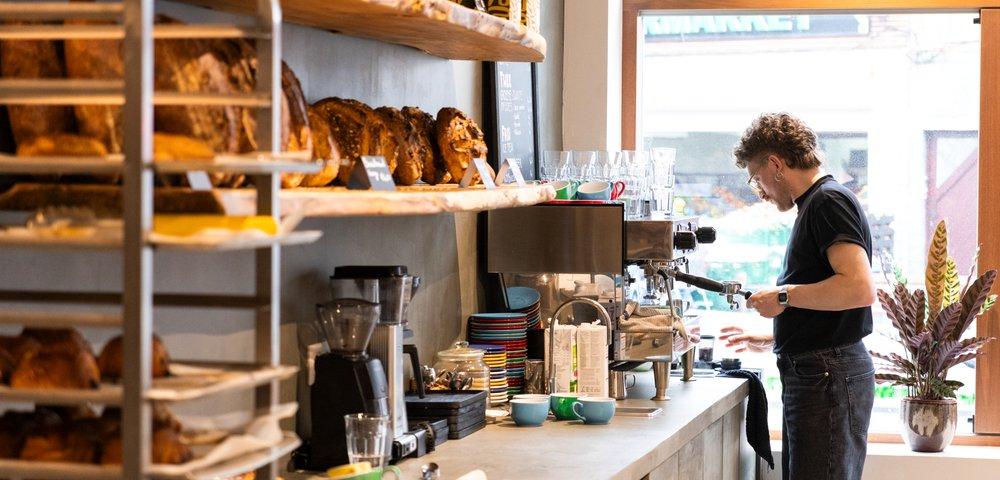
Every day at Morgen Bakkerij begins with the realization that time is the secret ingredient: here, bread gets the chance to truly become a story, full of passion, attention, and connection.
We made a very conscious choice for the adventure of 36 hours of fermentation. No coincidence, but an act of love for bread and craftsmanship.
What happens during a 36-hour fermentation?
In most modern bakeries, bread is made within a few hours. The process is accelerated with commercial yeast, which ensures a fast and predictable rise. At Morgen, they choose a radically different approach. They work with a wild sourdough starter, a living mixture of natural yeasts and beneficial bacteria that is maintained with great care. That is where the real magic begins.
The 36 hours is a triptych. It begins with the sourdough starter itself: it is fed and ferments for about three hours at room temperature, during which the phytic acids in the whole wheat flour already begin to break down. Next, the starter goes into the refrigerator overnight, for about twelve hours. In the second part, the dough is kneaded, followed by a five-hour bulk rise at room temperature. The loaves are shaped and then left to stand at room temperature for a short while. The third part is the retardation: another full night in the refrigerator.
That alternation of warm and cold is crucial. The cold slows down the activity of the yeast (which produces gas and makes the bread rise), but gives the Lactobacillus bacteria in the starter plenty of time to do their work. These bacteria are the true flavor enhancers. They break down carbohydrates and proteins in the flour and form complex organic acids, such as lactic acid and acetic acid. That is what gives sourdough that distinctive, layered flavor that you will never get from a quick bread.
This patient process is not about mass production, but about allowing everything hidden within the grain to fully come into its own. It is a method rooted in tradition, yet refined with a deep insight into microbiology.
The science of taste and health
The benefits of this prolonged fermentation go far beyond just a distinctive flavor. It fundamentally changes the composition of the bread, making it both easier to digest and more nutritious.
One of the most remarkable changes takes place with phytic acid, a natural substance found in whole grains. Phytic acid can bind to minerals such as calcium, iron, zinc, and magnesium, making it more difficult for our bodies to absorb them. During a long and slow sourdough process, enzymes known as phytase become active and break down most of the phytic acid. As a result, essential minerals become available, allowing your body to truly absorb them. The bread thus becomes not just a source of calories, but above all, a source of real nutrients.
Moreover, the long fermentation changes the structure of the dough. During the 36 hours, the proteins in the flour are slowly broken down, a kind of pre-digestion that lightens the gluten network. At least as important is what happens to the fructans: these are hard-to-digest carbohydrates (a group also known as FODMAPs) that cause many people to feel bloated. During the slow process, the bacteria break down a large portion of them. Many people who experience heaviness from regular bread therefore find that slow-risen sourdough agrees with them better. It is emphatically not gluten-free bread, but it is noticeably milder for many stomachs, while retaining its deep, layered flavor.
A model for sustainable baking
Morgen Bakkerij's commitment to slow fermentation is simultaneously a choice with implications for sustainability. This well-considered approach goes against the waste-producing model of the typical retail sector, where bread must remain on the shelves all day and what remains is thrown away.
Linde tries to avoid overproduction as much as possible. Ordering in advance is possible, but in practice, almost all customers do not; most simply drop by the shop. Instead, she relies on experience: over time, she can estimate quite accurately how much bread will be sold in a day, and she adjusts the oven accordingly. The loaves that remain are donated to food banks. In this way, bread is not seen as a disposable product that must always be in stock, but as something baked with care where little goes to waste.
This philosophy touches every aspect of the bakery. The building itself, a former hardware store in the Brugse Poort, runs on geothermal energy and solar panels. The choice of an electric oven and the avoidance of fossil fuels aligns with the patient, energy-efficient nature of their fermentation process. In this way, Morgen demonstrates a commitment to ecological responsibility that extends from the microbes in the dough to the energy that heats the ovens.
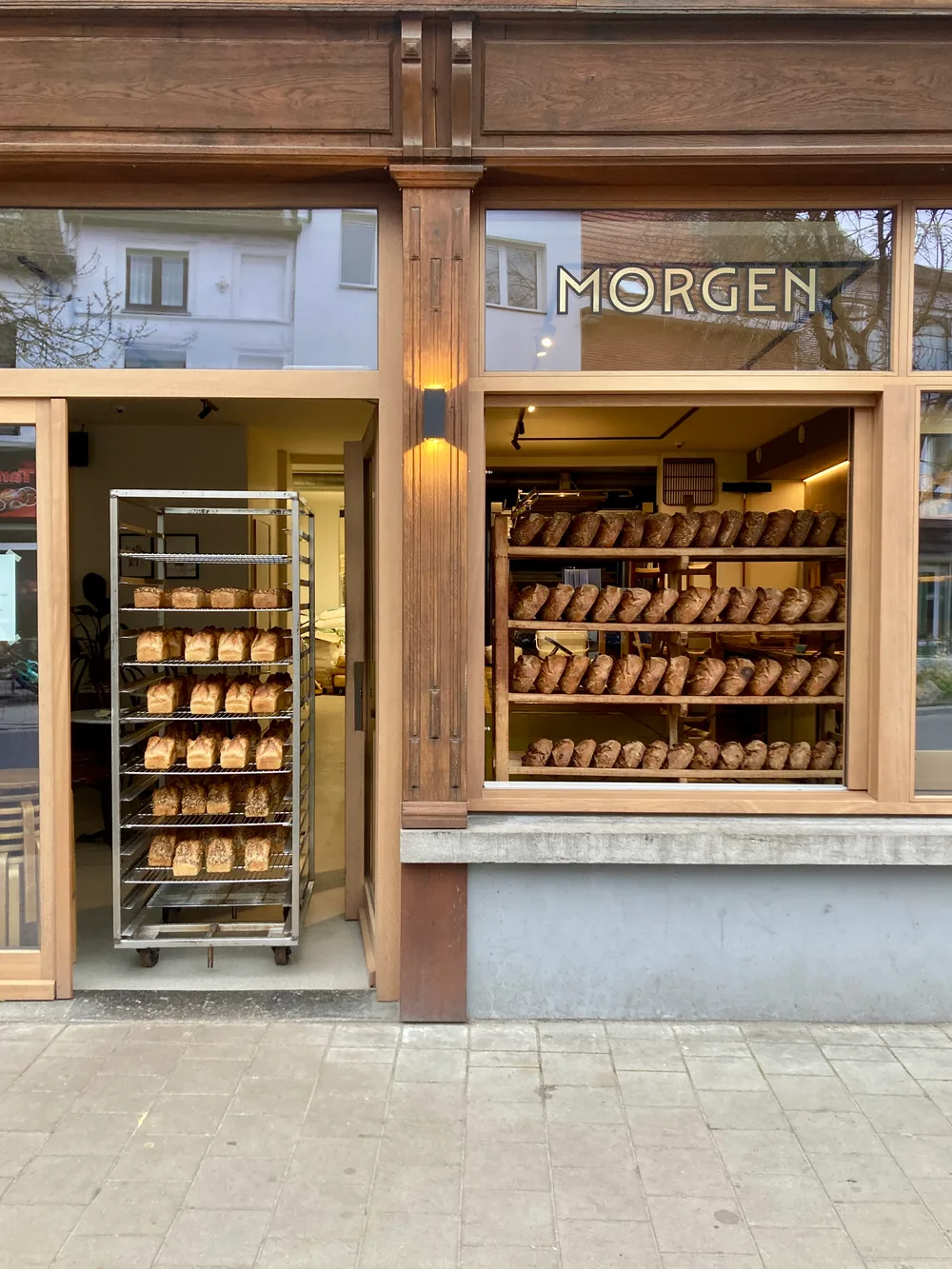
A story of community and connection
Ultimately, that 36-hour fermentation is about much more than just bread. It is about creating a genuine connection between the baker, the customer, and the entire community. Thanks to the radical transparency of the open workshop, where you as a visitor can experience the entire process up close, the craft is stripped of its secrets and you, as a customer, are invited to become part of the story.
When you buy a loaf of bread at Morgen, you don't just take food home. You become part of a system that makes time, health, and sustainability valuable. You support a business model that shows that profit and ecological ethics can go hand in hand. And you taste the result of a process that honors both ancient traditions and modern science.
In a world that constantly asks us to live faster, Morgen Bakkerij offers a delicious and powerful reminder of the value of slowing down. Their 36-hour fermentation is not just a technique; it is a philosophy. It is the story of how patience, passion, and intention come together to create something that truly nourishes both body and soul.