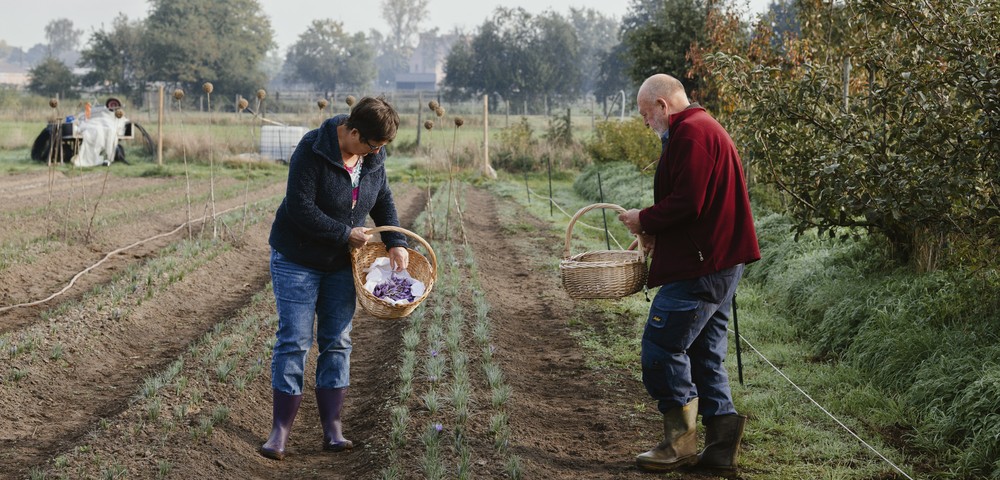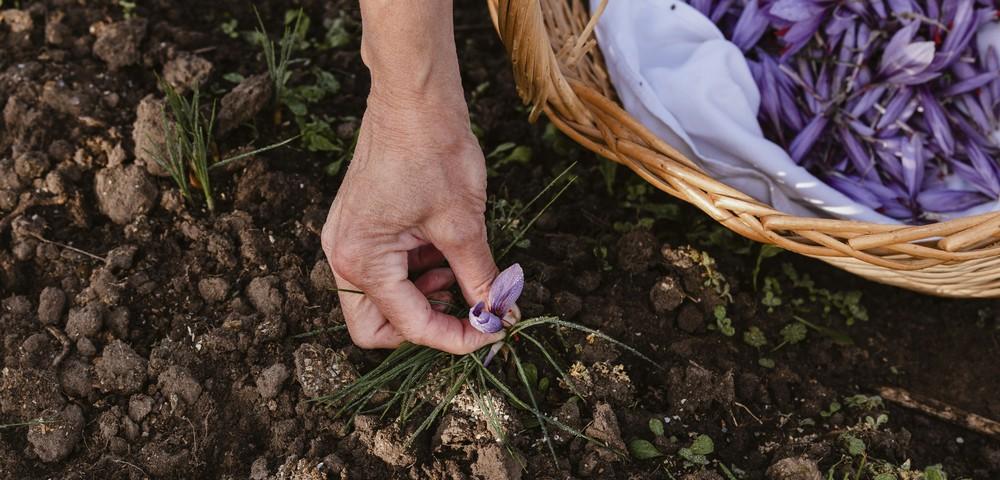
The soil whisperer of the Kempen: how Marc lets saffron speak through the soil.
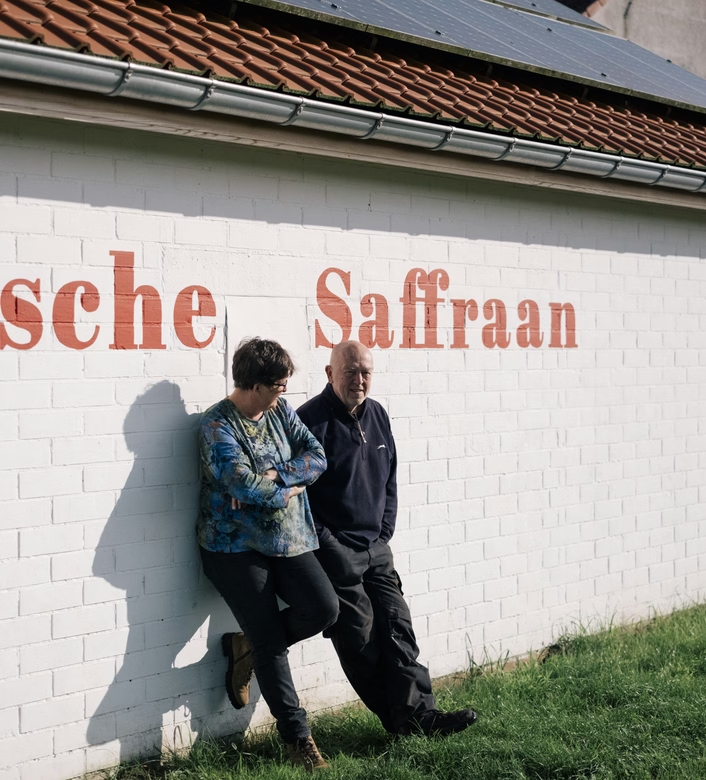
Marc’s journey is one of curiosity and dedication. Very deliberately, he distances himself from conventional farming and chooses regenerative, organic and biodynamic principles. For him, the secret of exceptional saffron lies not in feeding the plant, but in nurturing the complex ecosystem that supports it. This is the story of how Marc’s unique approach (from his pioneering work with Bokashi to his deep involvement with the soil food web) transforms the sandy Kempen soil into the foundation for saffron of unrivaled quality.
From the bottom up: a philosophy of cooperation
Marc's philosophy is simple yet profound: “we do not feed the plants, we feed the soil life.” This principle guides every action in the field. He views the soil not as a dead substrate, but as a vibrant, living community: a complex network of bacteria, fungi, protozoa, and nematodes. His mission is to create the conditions in which this community can flourish, believing that a healthy ecosystem ultimately ensures healthy, vital saffron. A cornerstone of this approach is his commitment to no-dig farming. By not plowing or turning the soil, Marc protects the delicate soil structure, and in particular the vital mycorrhizal fungal networks. These fungi form a symbiosis with the roots of the saffron crocus, allowing them to reach further and gain better access to water and nutrients. Plowing disrupts and breaks these networks, which sets back soil health. By leaving the soil undisturbed, Marc gives these underground webs the chance to grow stronger every year, laying the foundation for a resilient, self-regulating ecosystem. This deep respect for the integrity of the soil means that every organism, from the smallest microbe to the largest earthworm, is seen as a partner. Together, they create a balanced living environment in which the saffron bulbs receive exactly what they need, supplied via the living soil in which they root.
Bokashi: fermentation as a revolution in the soil
One of Marc's most innovative practices is his use of Bokashi. Instead of traditional compost, he uses this Japanese fermentation technique to enrich his soil. Bokashi means that organic material is fermented anaerobically (without oxygen) using Effective Microorganisms (EM). Marc uses only material from his own farm for this, making the system completely closed. The difference between Bokashi and composting is crucial. Composting is an aerobic process in which organic material is broken down, but significant amounts of carbon and nitrogen are released into the atmosphere. Bokashi fermentation, on the other hand, retains virtually all valuable elements. When the fermented Bokashi is added to the soil, it provides a powerful and immediate nutritional boost to the soil food web. This fermented material is packed with vitamins, antioxidants, and growth-stimulating substances. It acts as a superfood for soil life, stimulates activity, and rapidly increases humus content. Humus is the dark, organic component of the soil that is essential for retaining moisture and nutrients. On the naturally sandy soil of the Kempen region, humus build-up is of vital importance. Thanks to Bokashi, Marc transforms his fields into a rich, moisture-retaining, and vibrant base for his saffron.
A natural harmony: working with nature, not against it.
Marc's belief in a balanced ecosystem is also reflected in his approach to pests. His method does not revolve around extermination, but around creating a resilient environment in which pests do not simply get a chance. He learned a valuable lesson early on when he used Indian runner ducks against slugs: however, their droppings attracted rodents and disrupted the bulbs, thereby disturbing the very delicate balance he wanted to build. This experience led Marc to completely abandon external inputs, such as animal manure and natural pest controllers. Instead, he developed a strategy centered on smart, friendly ecological interventions. To deter voles (a common challenge with bulbous plants) he plants elephant garlic around and between the saffron rows. The strong scent of this plant acts as a natural barrier and keeps the rodents at bay.
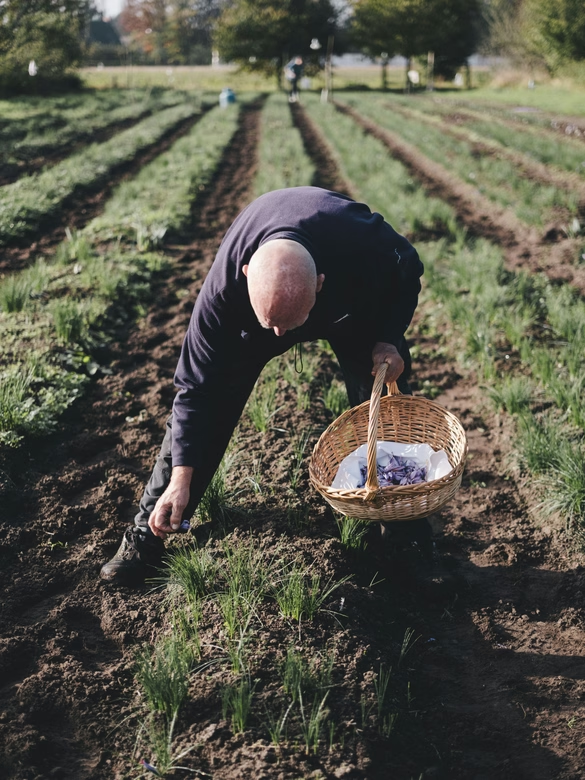
In addition, he uses subtle vibrations in the soil, caused by placing rods or pots, to make the environment unattractive to burrowing animals. This method is a beautiful example of his philosophy. Instead of waging a battle against pests, he uses his knowledge of nature to create a system of subtle control. By utilizing collaborations between plants and small disturbances in the ecosystem, Marc maintains balance naturally. In this way, the resilience of his farm grows from within. Fusarium, a fungal disease that can affect crocuses, is not combated with chemical agents, but is given no chance thanks to the diverse and competitive soil life in the healthy, living soil.
The taste of terroir: quality over quantity
For Marc, all this work comes together in the final product: saffron that is a pure expression of his terroir. Terroir is that unique combination of soil, climate, and human craftsmanship that gives a product its distinctive character. Marc strongly believes that the complexity and depth of flavor of his saffron stem directly from the living sandy soil of the Kempen region, something you can never achieve in a sterile and chemical hydroponic system. By focusing on the biochemical richness of the saffron (and not solely on yield) Marc cultivates a product with an exceptional concentration of flavor and aroma compounds. That quality was immediately visible with the very first harvest, where the intense color, scent, and taste directly reflected his vision for the soil. Every saffron thread tells the story of a healthy, vital ecosystem. Marc's work is a continuous journey of observing, learning, and constantly adapting. He relentlessly seeks balance, finds creative answers to challenges, and thus deepens his bond with the land. His story reminds us that true wealth in agriculture is not measured in tons per hectare, but in the vitality of the soil and the quality of what grows. He shows that by working with nature, you can not only cultivate a crop, but also grow a future full of resilience, flavor, and life.