
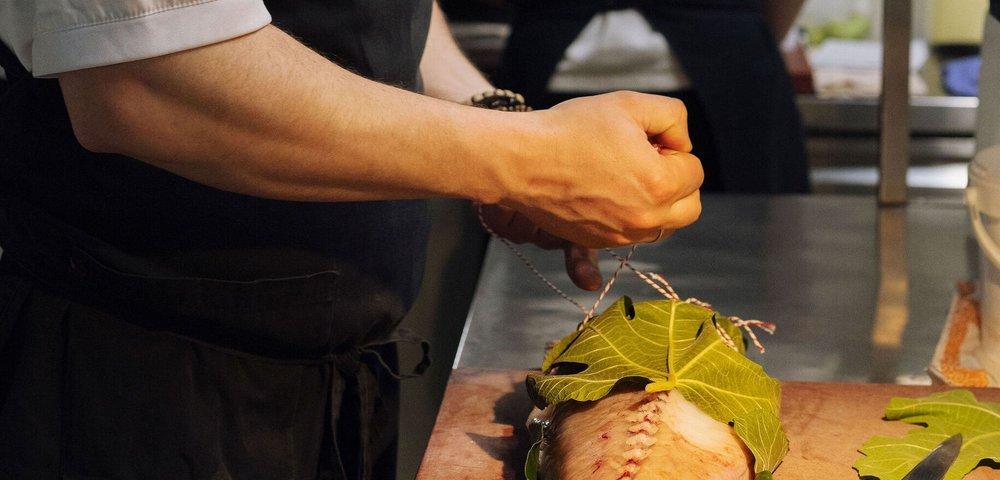
On Rue Notre Seigneur, in the lower Marolles district, the dining room of La Bonne Chère consists of just a few tables. Exposed brick, warm wood paneling, low lighting: a restored version of old Brussels, without anything ostentatious. At the counter this evening, a young squab awaits plating. It comes from the Pays des Collines region, from a breeder Alexandru Sapco knows by his first name and whom he calls when he wants slightly younger birds. Nothing on this plate is anonymous. It's the thread running through the entire establishment.
Alexandru Sapco cooks like he has a conversation, with people he has met, whose gestures and constraints he knows. His seasonal cuisine doesn't start from a fixed menu. It starts from what the land provides, at the moment it provides it.
A garden in Moldova
To understand this cuisine, one must go back to a village in the Ialoveni district of Moldova, where Alexandru grew up. In Răzeni, food came from the garden. There was only one shop in the village, open late, and not much in it. No tomatoes in winter, no cucumbers on the stalls in the off-season. Until he was fifteen, he ate what the family produced, and nothing more.
As a child, he watered the vegetable garden early in the morning, a chore he hated then but whose value he now appreciates. "I close my eyes and I can see what was in the garden at that time of year," he says. For him, seasonality isn't a theory learned in the kitchen, but a reflex instilled by childhood. He knows what a product should look like when it's ready, what it should taste like. This, he believes, is what some cooks still lack: understanding that a vegetable picked at the right time is already better even before it's cooked.
From washing dishes to cooking
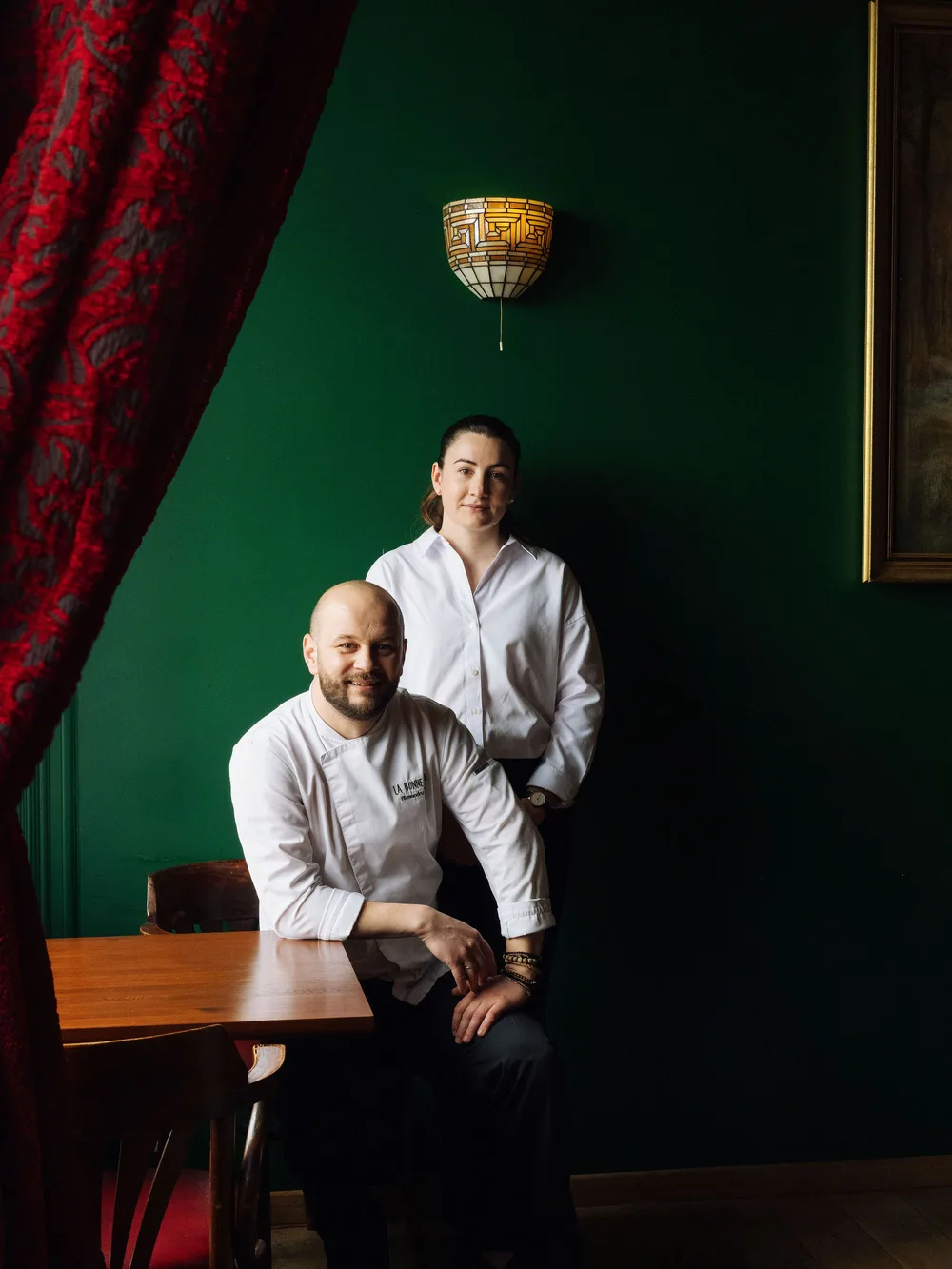
Alexandru arrived in Belgium in the early 2010s, at the age of eighteen. He didn't initially intend to become a chef: he started as a dishwasher, in a student job. When a kitchen assistant left the restaurant, the chef offered him a position in the kitchen. He held a knife for the first time, fell in love with the profession, and quit his studies to stay behind the stove.
He learned his trade in Brussels kitchens, where Dirk Myny, of Les Brigittines, became a mentor and almost a second father. Awarded Young Chef of the Year in 2023, he and his partner run their own restaurant, La Bonne Chère, a true family affair.
His cuisine is seasonal and unlabeled. He seeks a balance between land, sea, and vegetables, with a particular fondness for surf and turf combinations: octopus with black pudding, which has become a house classic, or a cheesecake made with Herve cheese. Local produce plays a central role, less as a selling point than as a starting point.
Find the producer
When he opened his own restaurant, Alexandru faced a real challenge: finding the right producers. For a long time, suppliers had been imposed on him. By setting up his own business, he had to build up a network of contacts, search after search.
One of the first was Stéphane, for his asparagus, which he was already working with before opening. What appealed to him wasn't just the quality of the vegetable, but the producer's approach: choosing his customers because they liked the product, not because they were famous. The idea stuck with him.
In Belgium, he's rediscovered a movement he saw emerging elsewhere. When he left Moldova, agriculture there was geared towards mass production, even at the cost of overexploiting the land. Since then, he says, quality has made a strong comeback: artisans, producers who want to do things right, and even appellations, somewhat like those in France. It's the same return to local products and traditional methods that he's observed around Brussels.
The animal, down to the last piece
This is also what led him to Entier, a Brussels-based non-profit organization that connects restaurateurs directly with farmers. Alexandru was one of its initial driving forces. The collective's philosophy immediately convinced him: to consume the whole animal, to showcase all its parts, both the prime and the less desirable.
Here again, it's a matter of expertise as much as principle. "People associate good with tender," he observes. "Meat can be less tender and still be excellent." Knowing how to make the most of a cut that others would discard is, in his view, what distinguishes a chef. At Entier, the animals are raised outdoors, connected to the land, with natural reproduction, and care based on prevention and respect for living things, water, and the biodiversity surrounding the farms.
The relationship with the farmer is more than just a simple order form. Regarding the duck, Alexandru indicated that he felt it was slaughtered a little late, that he preferred it younger and less fatty. Next year, they will adjust things together. "It's a human relationship; we all grow together," he summarizes.
What rules cost
This proximity, however, runs up against obstacles that weigh most heavily on smaller producers. Slaughterhouses, for one. They are few in number, particularly in Wallonia, and charge per action rather than per weight. Decapitating and cleaning a chicken costs roughly the same as a quail: the heavier poultry absorbs the cost, but a quail can go from around €4.70 to €8.70 once the slaughtering fee is paid. At the end of the chain, the producer charges a price that some consumers will consider too high, and they will look for cheaper options elsewhere.
There are also the offal items, which aren't always reused and often end up as animal feed, whereas Alexandru loves terrines and is determined not to waste anything. The temptation to make everything whiter than white, he says, forgets that sometimes things need to be allowed to happen naturally. He understands the costs, the labor, the overhead: "It's understandable, but it shouldn't be this way."
The contrast with his childhood is significant. In Moldova, everyone still butchers their own pig at home, a skill passed down from generation to generation. Last winter, he did it himself, with his son already helping out.
Share rather than keep
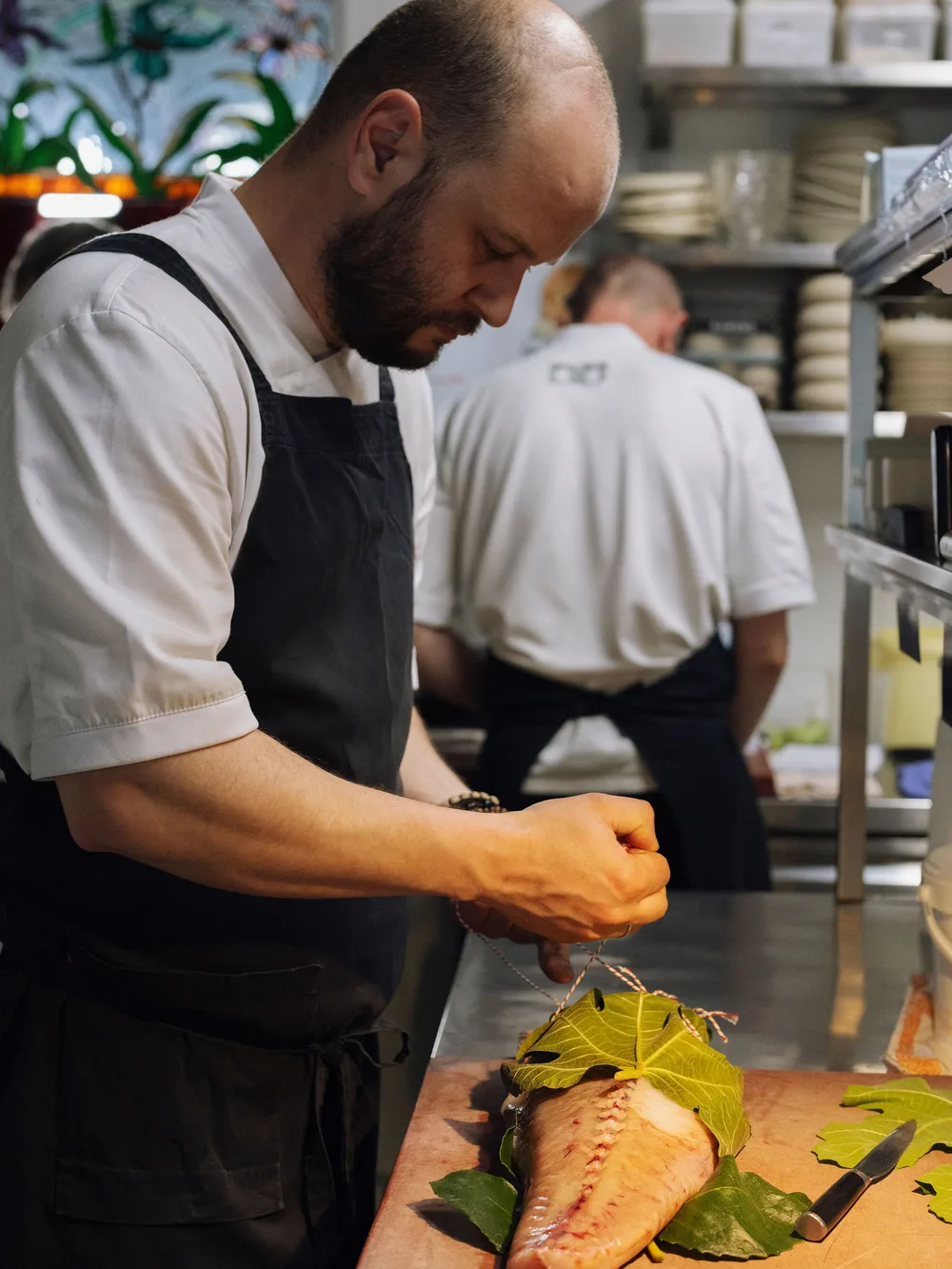
One conviction remains constant throughout his career: sharing. Alexandru is wary of secretive kitchens, hidden recipes, and producers kept to oneself. For him, we learn from each other, and we distinguish ourselves precisely by adding our own contribution to what we have received. "What bothers me is not sharing, it's not sharing."
At first, he experienced it the other way around: producers who refused to work with him because he wasn't well-known enough. He understands exclusivity when production is genuinely limited, when a breeder can't fulfill more orders. However, he finds it hard to accept when it's used as a pretext.
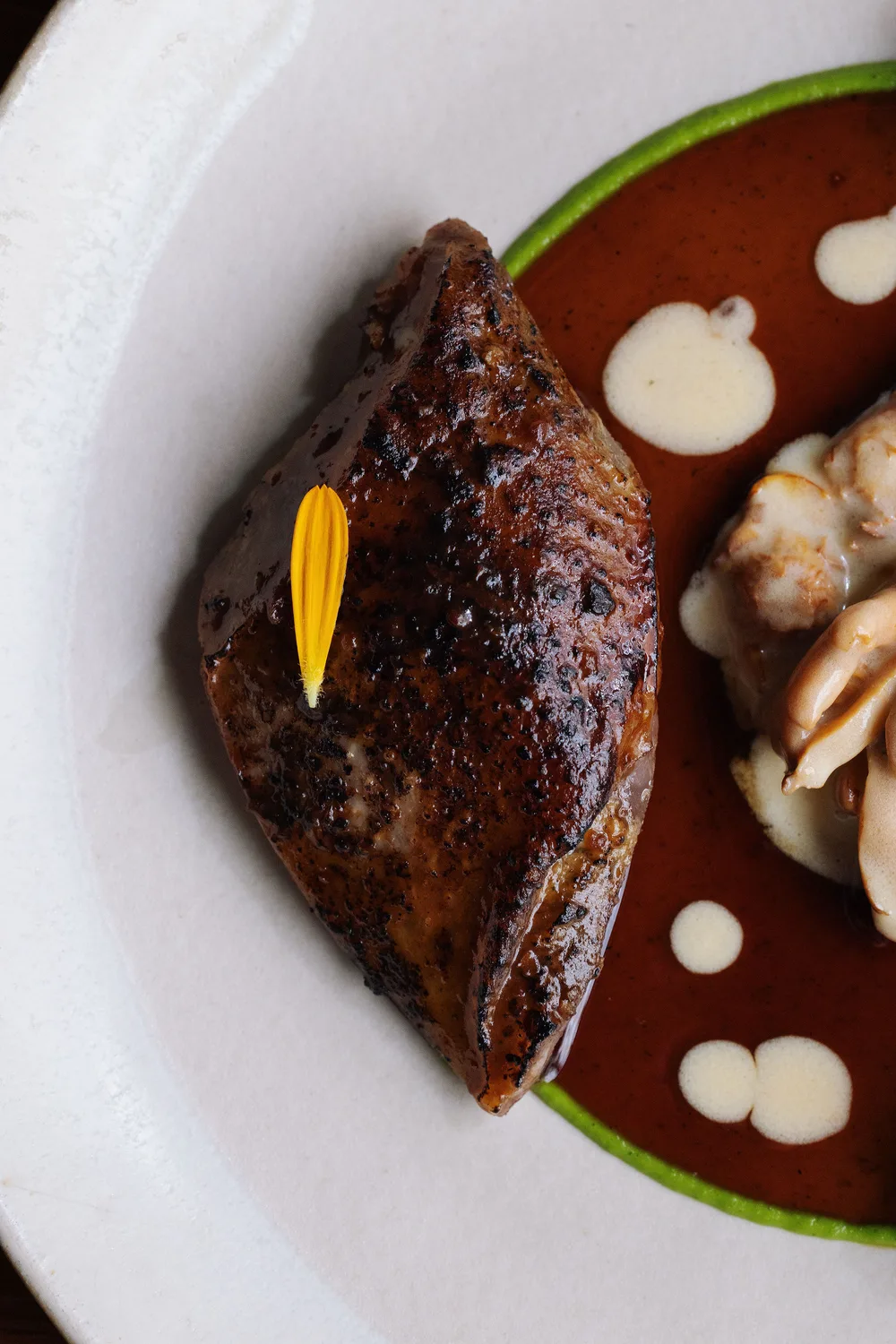
The young squab at the beginning is the best example. Alexandru has been working for three or four years with Jérôme Demeyer of Pigeonneau des Collines, whom he met at a dinner near Ath. Jérôme raises, slaughters, and sells his birds himself in the Pays des Collines region. The squab, the only farmed fowl that is altricial, meaning it is fed in the nest by its parents, requires special care. It is now on the menu at La Bonne Chère, and it should stay there: "He does it well."
Alexandru plans to invest more in Belgium and stay there. He keeps a door open to Moldova, where things are also changing rapidly, and where his family lives. But what he brought back from his village can be summed up in a few words: knowing what something should taste like, and in what season.
The rest he rebuilt here, one relationship after another. A pigeon breeder in the hills, an asparagus grower, a meat cooperative he helped launch. At La Bonne Chère, the menu changes with the seasons because the memory of a garden remains constant. And when his son is already holding the knife for the winter pig, it's the same chain that continues, from one generation and one country to the next.