
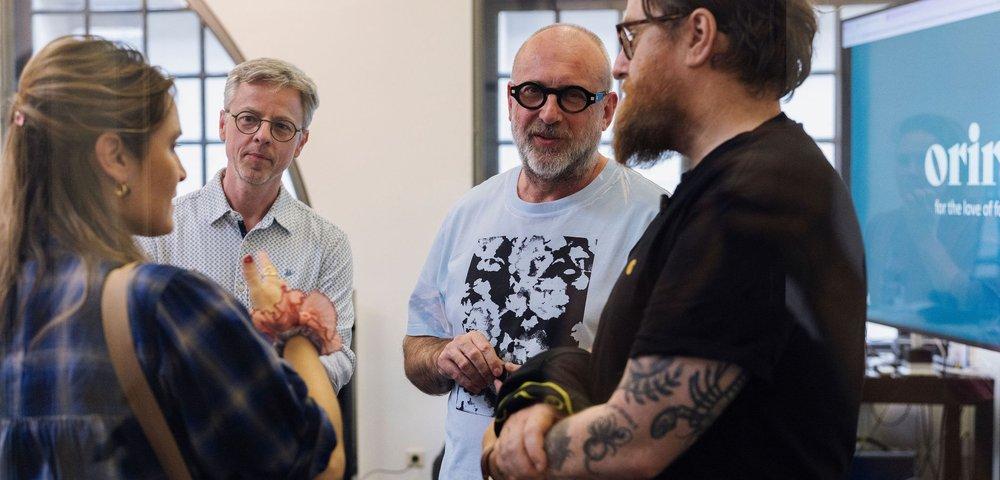
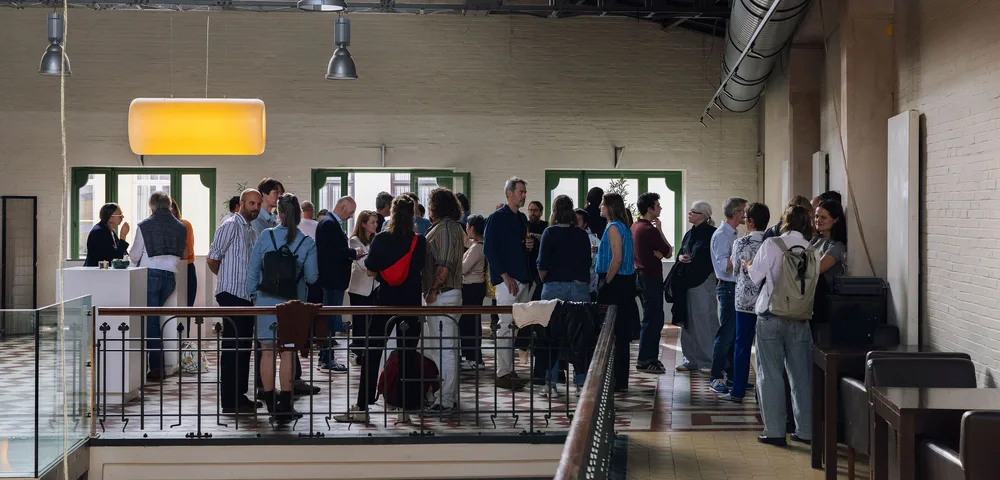
A fireside conversation for the launch of oriri: Galway chef and Food on the Edge founder JP McMahon (JP) in dialogue with co-founders Christophe Mes and Toon Diependaele, moderated by Femke van de Velde.
Ask a chef who has cooked across two countries about Belgian food culture and the first thing you get is honesty about distance. “We all suffer from thinking the grass is greener,” JP says early in the evening. Whenever he’s in Belgium, he admits, he assumes the food culture here is stronger than Ireland’s. He sees a strong classical tradition, tied to France, and alongside it a younger generation of cooks trying to step outside that repertoire and work directly with the people who grow and raise their ingredients.
That tension, between the polished plate in front of you and the quieter web of work behind it, ran through the whole conversation. It’s also the ground the two founders have chosen to build oriri on.
The producer, and the quiet loss of variety
Asked who belongs at the centre of the ecosystem, the answer comes back without hesitation: the producer. Not for sentimental reasons, but because the producer is the guardian of variety. The worry voiced around the table is that we’re slowly losing the knowledge of where food comes from and, with it, diversity itself.
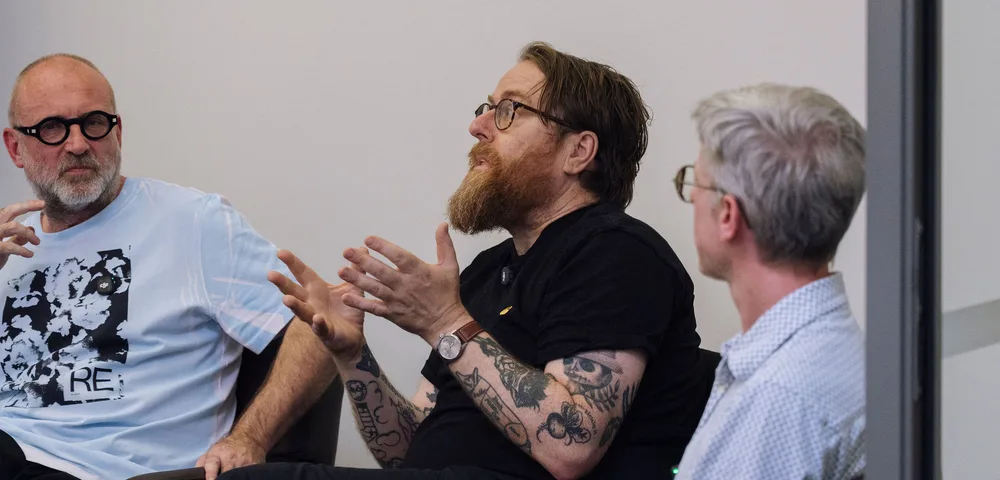
“We’re under the illusion that we have more and more food,” JP says, “but we have less and less variety.” He describes the safety people feel in sameness. The orange carrot is familiar; a purple or a yellow one prompts the question of whether something is wrong with it. Supermarkets, sourcing year-round tomatoes from a single region, quietly remove the need to ask what’s in season at all.
Christophe, who looks after the technology behind the platform, sees the same thing from the demand side. “People aren’t really taught anymore,” he says. “You go to the supermarket and everything is exactly the same, and that uniformity is its own kind of danger.” When every shelf looks identical, the product behind it tends to come from a single supplier, and the variety narrows further.
Food as culture, not commodity
For JP, the deeper fight is to have food recognised as culture at all. “In Europe we have this huge cultural enterprise of music, art, film,” he says. “Food is never put in that sphere. It’s a commodity. It sits in the supermarket.” He’s wary, though, of another trap, where the story of food becomes an elite pursuit for people with the means to travel and collect experiences. His correction is disarmingly simple. “The story of food is what you had for breakfast.”
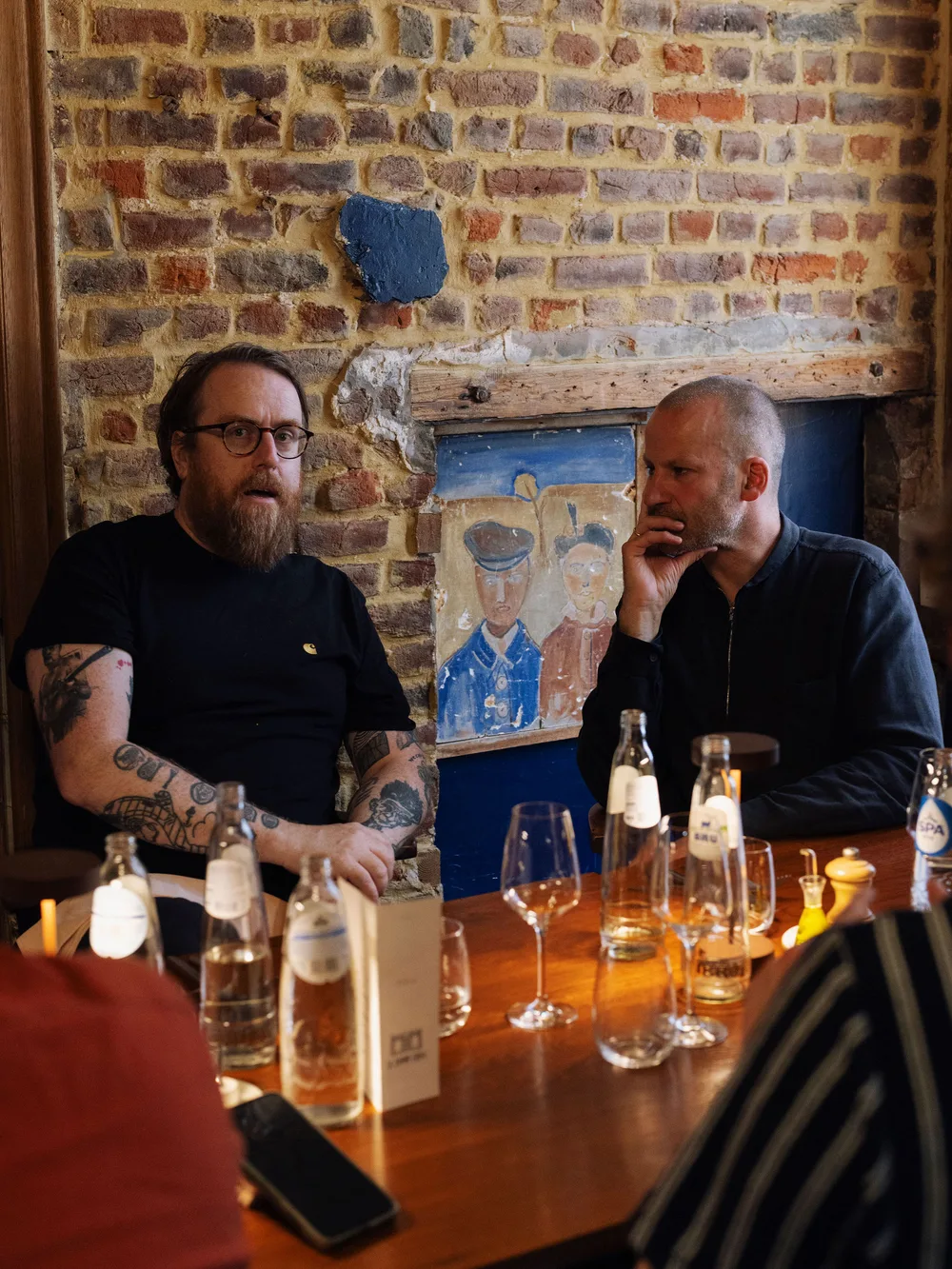
He’s stopped describing the people he gathers as chefs. He prefers food entrepreneur, a term wide enough to keep a farmer, a cook, and a technologist in the same room. The division between those who grow or cook and everyone else who simply shops is, in his view, a false one. Everyone eats, so everyone is already part of it.
A sideways view
This is where the conversation turned to ratings, and to a decision the founders made early. Their platform carries no reviews, no stars and no advertising. The aim they set themselves was to guide people along the whole chain, not just the final step. “It was a fairly easy choice, but not always easy to understand for outsiders” Christophe says. JP doesn’t read this as hostility to reviews. There’s a place for them, he says, and plenty of people who do that work well. The aim is simply to look elsewhere.
The phrase Toon reaches for is a sideways view. Not a head on verdict on the finished plate, but a look along the chain that produced it. The same instinct runs through Food on the Edge, the symposium JP founded in Galway, now ten years old. There’s no headline speaker. A farmer and a world-renowned chef are listed alphabetically, on equal footing. “Some people will only come if they can be the headline speaker,” he says. “We don’t have one. Sometimes they don’t come.”
Craft, and the need for a bigger middle
If craft is so widely admired, why is it so hard to sustain? JP’s answer is economic. Mass production is so vast that craft becomes either expensive or dependent on subsidy. He tells the story of furnishing a restaurant and finding only two options: a maker who would build one chair for a small fortune, or a supplier who would deliver fifty cheaply. “I couldn’t find anybody in the middle,” he says. “At the moment you’re either an artist or a capitalist. We need people in the middle.”
He’s candid about the contradiction in his own life. In the restaurant, he says, he works in a kind of bubble; he’s never asked his vegetable grower the price of anything. At home, with two children and a weekly shop, the budget is real. The point isn’t to choose one world over the other. “It’s not either-or,” he says. The restaurant, for him, is a window onto what a food culture could be. A handful of small growers supply a circle of restaurants and make their living that way, precisely because their produce is too characterful for the supermarket. For everyone else, the change can be modest: choosing local strawberries when they’re in season rather than the cheaper import, knowing that what sells is what the shelves will carry next.
Toon frames the same idea as a principle he keeps returning to: no ecology without economy. Every link in the chain, including the young farmer starting out on regenerative land, has to be viable. Choosing those makers, he insists, isn’t a favour. “It isn’t about supporting anyone,” he says. “It’s the logical choice. Everyone gets their fair share of the attention, and their fair share of what is spent.”
Technology that amplifies rather than replaces
The founders are clear about what they want technology to do, and what they do not. Toon describes two aims. Make it easy, so a producer only needs his web address and social handle and have a profile build by the platform. And amplify, so a maker with a modest following can reach far beyond it. “Technology shouldn’t replace these things,” he says. “It should help raise the voice. Beyond the review, beyond the label, to the story.”
The spark for all of it came years earlier, in a celebrated restaurant abroad. Toon noticed bottles from a producer friend sitting in the fridge and sent him a photo. The reply stayed with him. Wouldn’t it be wonderful, the producer said, if makers knew where their product ended up, so they could tell its story to the people in that room. That small gap, between the maker and the table, became the thing worth closing.
One thing worth saving
Femke van de Velde closed with a question for all three. If gastronomy vanished tomorrow and you could save one thing, what would it be?
JP chose bread. From the wheat to the baker to the person who eats it, he sees it as a fundamental, and a quiet test of any food culture. “A good ham and cheese sandwich is the ultimate barometer,” he says, before lamenting the sameness of the road: drive from Galway to Belfast and every stop offers the identical sandwich. Changing that, he jokes, would feel almost revolutionary, which is reason enough to wonder why no one has.
Toon chose connections. He travels with bottles of Belgian geuze and leaves them, like a calling card, on the doorsteps of producers and makers he hopes to meet. One bottle, left for a winemaker who wasn’t home, earned a reply four months later. The connection is the point, he says, whether it comes with a maker or over a long lunch with a friend. “Those stepping stones are the beauty of it.”
Christophe chose history and knowledge, because from those you can rebuild. A forgotten grain reintroduced, a variety grown again, and the thing begins to snowball.
Three answers, really saying one thing. The most important part of a meal is the part you cannot see on the plate. A food culture stays alive less through the ratings in front of us than through the relationships behind it.