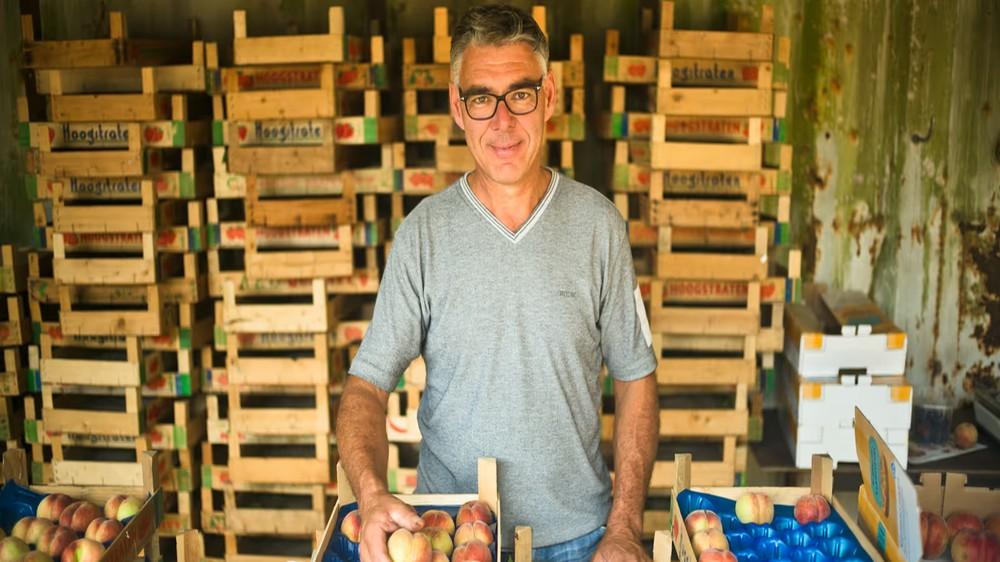
The modern food system often feels distant. Efficiency and scale have pulled the human element out of the chain, and many of us have lost sight of where our food actually comes from. Yet across Belgium and the wider European gastronomic landscape, a quieter movement is taking shape. Producers, shops and restaurants are finding each other again, building something that looks less like a supply chain and more like a network of relationships.This network is held together by three things: local collaboration, a willingness to be transparent, and a shared respect for the land. True taste begins with care, and when skilled hands work in step with nature, the result travels well beyond the plate. Each partnership sets off a small ripple, and together those ripples reshape economies, landscapes, and communities.
Craftsmanship and terroir: the roots of true taste
For decades, the industrial food chain has relied on deskilling: the gradual removal of human judgement and artisanal knowledge in favour of speed and uniformity. The collaborative model quietly reverses that logic. It places craftsmanship back at the centre of flavour.When a restaurant chooses to work with a nearby producer or a small-scale cheesemaker, it is not simply buying a product. It is buying time, attention and practice. Every ingredient carries a story of patience and pride, and naming that story in the kitchen draws food lovers closer to the people behind it.A vital part of that story is terroir. The interplay of soil, climate, and generational knowledge gives an ingredient its signature: a tomato grown on a sun-warmed slope tastes different from one raised in a standardised greenhouse, because place and practice both leave their mark. Industrial systems try to engineer that variation out. Collaborative gastronomy celebrates it as something technology cannot mimic.
The economic ripple: keeping value where it is made
When producers, shops and restaurants work together in short chains, they sidestep large-scale distributors, and a fairer share of the value reaches the people who actually grow, bake, brew or ferment. That is a shift in bargaining power, not just in margin.Economists sometimes describe this as a local multiplier effect. When revenue stays close to its source, farmers and artisans are more likely to hire local labour and buy supplies from nearby businesses. Their employees, in turn, spend within the same region. The initial euro keeps moving, and the community grows richer in the process.This circular flow does not only revitalise local economies. It strengthens the position of small-scale makers, and it quietly rebalances a food system that has long favoured scale over skill.
Environmental stewardship beyond food miles
Food miles are a familiar yardstick for sustainability, but they only tell part of the story. Shorter distances do not automatically mean lower emissions; an efficient long-haul shipment can sometimes outperform a half-empty local van. The deeper environmental gain of local networks sits earlier in the chain, in how food is grown and processed.Collaborative networks give producers the stability to adopt regenerative, low-input farming methods: building soil, cutting synthetic inputs, protecting water. Restaurants working directly with nearby organic farms have a real say in how their ingredients are grown, and that proximity often pulls standards upwards on both sides.Biodiversity follows the same pattern. When shops commit to sourcing locally, they create a market for heritage breeds and forgotten varieties, and that agrobiodiversity makes the wider system more resilient. Circular practices close the loop further: kitchen scraps composted back onto peri-urban farms, spent grain from a brewery feeding animals or enriching soil, surplus produce redirected to social organisations rather than discarded.
Gastronomy as a social fabric
Beyond economics and ecology, local collaboration weaves a social thread. Restaurants and shops become gathering places where sustainable values move from principle into practice. Hospitality, at its best, is a gentle form of activism.By telling guests where a dish comes from, a team builds a shared sense of responsibility. Relationships with small-scale producers stop being purely logistical and start resembling genuine partnerships, built on trust and repeated conversation.Collaborative food systems also open doors for social inclusion. Projects that combine gastronomy with a social mission, for instance by employing young people with intellectual disabilities, show that a kitchen can be warm, inclusive and highly professional at the same time. Citizen-led cooperatives add another layer: solidarity purchasing groups connect food lovers directly with farmers, paying for seasonal harvests upfront so that growers have secure incomes. Participative supermarkets let members contribute their time in exchange for accessible prices on high-quality local produce. All of it proves that fair pay for makers and fair prices for eaters can live under the same roof.
Overcoming logistical hurdles together
Scaling local food comes with practical friction. Getting produce from small farms into urban kitchens, the so-called last-mile problem, remains one of the trickier knots to untie. Fragmented supply chains and distribution costs can dampen the ripple effect before it spreads.Collaborative infrastructure offers a way through. Food hubs are emerging to aggregate, store and distribute locally produced food. By pooling the harvest of several small farms, they reach economies of scale without losing their local character, and they open access to larger customers such as schools and hospitals.Producers themselves are finding similar answers. By sharing transport, cold storage or distribution routes, they reach new markets without each having to build the same logistics from scratch. None of this is glamorous work, but it is the plumbing that lets small-scale craft survive in a market designed around volume.
Technology in service of transparency
In a collaborative ecosystem, technology is most useful when it stays in a supporting role. It should make human relationships easier to sustain, not replace them.Digital tools can help a restaurant share the stories behind its menu, discover new producers, and manage day-to-day operations with less friction, freeing the team to focus on the craft of cooking. For a producer, the same kind of tooling can make visibility into farming techniques and production choices a natural part of doing business, rather than an extra marketing task.The goal is to move past a storm of labels and certifications and towards something simpler: an open invitation to see the work behind the food. Transparency, in this reading, is not a list of ingredients. It is a readable chain of relationships.
A movement worth joining
Local collaboration is not a niche trend. It is slowly becoming a structural necessity. The partnerships between producers, shops and restaurants touch every pillar of sustainability: they keep wealth within communities, reduce environmental footprints, and turn dining rooms and shop counters into places of connection.Every conscious choice at a table or a counter sends a small wave through this ecosystem. Valuing the skilled hands that craft our food, and the land and people that make it possible, is how a more grounded food culture takes shape, one meal at a time.