
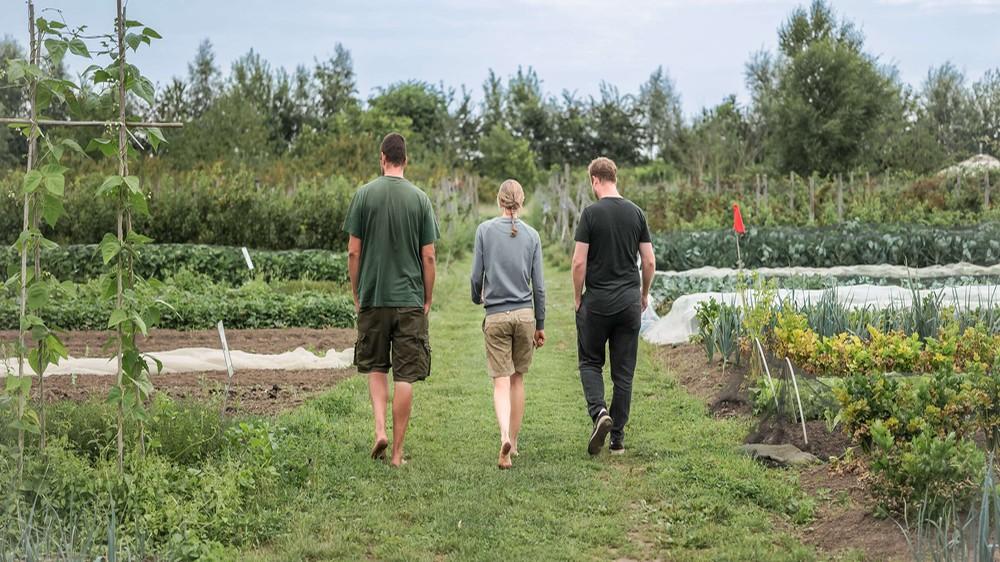
In the heart of modern gastronomy, a quiet but meaningful transformation is underway. For years, a dish’s worth was measured almost entirely by a chef’s flair or the visual appeal on the plate. But today, a new standard is shaping our understanding of true taste. Now, it’s not only about the magic in the kitchen, but also the honesty of the journey each ingredient takes. At oriri, we believe transparency is no longer a logistical afterthought or a legal necessity. It’s become the foundation of a sustainable food culture. For the small players that form the backbone of this world — from artisanal producers and small-scale farmers to independent restaurateurs and specialist shops — openness isn’t a challenge; it’s a strength to celebrate. While the industrial food chain tries to engineer transparency through systems and labels, the real pulse of sustainable gastronomy beats at a human scale. It’s in the soil, the passing seasons, and the skilled hands that shape what we eat. Here begins the architecture of trust. Where origins and processes come into view not through impersonal stamps, but through genuine connections.
From product to process: a new way of valuing food
To understand how far we’ve come, it helps to look back. Food was once at the centre of daily life, both in meaning and in cost. As time passed, efficiency, scale, and anonymity set in, often breaking the link between those who nurture food and those who enjoy it. Now, that tide is shifting again. More and more, people crave authenticity, layered flavour, and a deeper sense of how their choices affect nature, place, and community. Food safety and low prices alone are not enough. This is where transparency steps in, not as a dry list of ingredients, but as an invitation to rediscover the care and responsibility behind every product. It helps us value food not only for what it is, but for the work and care that shape it. Suddenly, the human connection is visible again. On a human scale, gastronomy focuses on craftsmanship rather than mere efficiency. Industry may see only uniform inputs, but we see terroir: the lively interplay of soil, climate, tradition, and skilled hands. Where old systems depended on regulations, we nurture trust through open relationships and honest exchanges.
Terroir: the unforgeable signature
With terroir, the thread of transparency runs even deeper. Whispered in vineyards but relevant everywhere, terroir is about the unique combination of soil, weather, and people that gives food its story.In sustainable gastronomy, terroir becomes proof of origin that technology can’t mimic. Every region has its own distinctive nature, like the mineral-rich field, the windswept orchard, the cool valley, that imprints its mark on the palette. A tomato grown on volcanic slopes tastes different than one from a greenhouse, because place and practice matter. But terroir is more than landscape. Generational knowledge like the teaching of a pruning technique or a careful ferment is woven into its very fabric. Human presence shapes terroir just as surely as rainfall or sun. When restaurants and producers share these stories, they invite guests to experience the layers beneath every bite. Suddenly, an asparagus isn’t just tender; it carries the memory of sandy soils and river mist, made visible by a chef who knows its source. Through this storytelling, we all get to open the book behind the taste.
Craftsmanship: the soul of the chain
This visible care continues with craftsmanship. Genuine taste always begins with careful hands, each step a testament to patience, practice, and pride. As industry is shifting to ‘deskilling’ (removing the human element in favour of speed), small producers are doing the opposite. Their stories become the primary tool for sharing craft. In telling the story behind a cheese, a loaf, or a harvest, they honour not just the product, but the web of people, skills, and tradition that brings it to life. Here, a menu becomes a palette for local expertise, celebrating dedication, making clear that food shaped by true care transcends transaction. The emotional connection draws foodies closer to the source, with more meaning in every bite.
Transparency beyond labels and marketing
As diners become more curious, the food industry has responded with a storm of logos, marketing slogans, and official labels. These may promise trust, but they often risk drowning the real story in corporate language. We see a trend of greenwashing, where the facades of sustainability hide industrial realities. In this environment, a label is not enough. At oriri, authenticity takes root in the visible work of the maker, not in certification or labels. We believe that introducing a label cannot replace the richness of a direct relationship. Without human context, a logo means little. That’s why our approach highlights storytelling, making origins and processes visible and real. True taste begins with care, not a shiny sticker or marketing spin.
Building trust through community
Instead of bureaucracy or costly third-party checks, oriri champions community-based assurance. Here, everyone: producers, chefs and shopkeepers share responsibility for quality. This approach is practical and empowering. Open visits, shared learning, dialogue, and ethical decisions replace cold inspection. A farm visit, for instance, becomes a lesson in compost, crop challenges, or growing methods; a two-way street where knowledge circulates. For small players, this kind of participatory system relieves the burden of strict admin and high costs. More importantly, it strengthens the relationships that make our food system resilient and transparent. Trust grows from the ground up, built on real encounters and collaborative standards.
The short chain: direct relationships as ultimate transparency
One of the purest routes to transparency is to shorten the chain. When distance shrinks between grower and chef or between farmer and buyer, the food’s story sharpens and so does its flavour. Through direct trading or partnerships, farmers become ‘price setters,’ not just ‘price takers’. Fairer rewards follow, as well as a shared stake in quality and innovation. The kitchen and the field become connected laboratories; chefs can offer feedback to producers, who in turn share what’s happening with soil, seeds, and seasons. Here, technology isn’t needed for traceability. Trust rides on a handshake, an honest chat, and the ongoing conversation that connects everyone at the table.
Accessible technology: tools, not masters
We’re not here to reject technology; rather, we ask that it serves, not leads. ‘Soft tech’ tools—simple, affordable digital ways to share stories—can amplify transparency without diluting its meaning. At oriri, we see technology as a bridge: connecting stories, preserving experiences, and cultivating genuine understanding. Used well, they bind the ecosystem closer, always rooted in care and authenticity.
Respect for nature and people: the ethical anchor
Transparency isn’t just about seeing, it’s about valuing. A truly sustainable and ethical food supply chain must rest on both ecological integrity and social justice. Showing how we nourish biodiversity, restore soils, and honour ecosystems is part of this. So is being clear about labour: a fair price for a farmer or artisan underpins the possibility of lasting stewardship. Only when people are recognised and rewarded is it possible for care for the land and community to flourish. Price becomes less a measure of expense and more a reflection of value: livelihoods, landscapes, and futures protected with every purchase.
Conclusion: a future of clear connections
Transparency in gastronomy is a form of storytelling, shining a light on the terroir of a region, the skilled hands of each maker, and the deep respect uniting people and nature. For the oriri community, openness is not just a value but the engine for a robust, responsive ecosystem. The more we build around the human scale, the more we unlock unique, irreplaceable value: a culture where connection, understanding, and care shape every step .We invite you to look more closely at what you eat – asking questions, meeting producers, and listening to stories. When we follow food along its journey, every meal becomes a lesson, a celebration, and an act of connection. The future of gastronomy is local. It’s human. And above all, it’s crystal clear.